センスが良いですね!
ログインしてお気に入りのアーティストをフォローしたり、イベントを保存したりしましょう。
あなたの街にやってくる大好きなバンドやアーティストのイベント日程を調べましょう。Bandsintownを使って、コンサートチケットや最新ニュースを入手してください。

'%3e %3cpath d='M17.2 8.65233C17.2 3.87262 13.3508 0 8.6 0C3.84919 0 0 3.87262 0 8.65233C0 12.9785 3.12097 16.572 7.24758 17.2V11.1643H5.0629V8.65233H7.24758V6.76836C7.24758 4.60527 8.53065 3.38418 10.4726 3.38418C11.4435 3.38418 12.4145 3.55862 12.4145 3.55862V5.68682H11.3395C10.2645 5.68682 9.91774 6.3497 9.91774 7.04746V8.65233H12.3105L11.929 11.1643H9.91774V17.2C14.0444 16.572 17.2 12.9785 17.2 8.65233Z' fill='%236D6D6D'/%3e %3c/g%3e %3cdefs%3e %3cclipPath id='clip0_11991_110375'%3e %3crect width='17.2' height='17.2' fill='white'/%3e %3c/clipPath%3e %3c/defs%3e %3c/svg%3e)
'%3e %3cpath d='M13.546 0.716797H16.1835L10.4214 7.3954L17.2 16.4835H11.8924L7.73534 10.9716L2.97869 16.4835H0.339647L6.50272 9.33995L0 0.716797H5.44232L9.19996 5.75485L13.546 0.716797ZM12.6204 14.8825H14.0818L4.64822 2.23363H3.07994L12.6204 14.8825Z' fill='%236D6D6D'/%3e %3c/g%3e %3cdefs%3e %3cclipPath id='clip0_11991_110380'%3e %3crect width='17.2' height='17.2' fill='white'/%3e %3c/clipPath%3e %3c/defs%3e %3c/svg%3e)
'%3e %3cpath d='M8.6192 4.16563C6.16205 4.16563 4.20402 6.16205 4.20402 8.5808C4.20402 11.0379 6.16205 12.996 8.6192 12.996C11.0379 12.996 13.0344 11.0379 13.0344 8.5808C13.0344 6.16205 11.0379 4.16563 8.6192 4.16563ZM8.6192 11.4603C7.04509 11.4603 5.73973 10.1933 5.73973 8.5808C5.73973 7.0067 7.0067 5.73973 8.6192 5.73973C10.1933 5.73973 11.4603 7.0067 11.4603 8.5808C11.4603 10.1933 10.1933 11.4603 8.6192 11.4603ZM14.2246 4.01205C14.2246 4.58795 13.7638 5.04866 13.1879 5.04866C12.6121 5.04866 12.1513 4.58795 12.1513 4.01205C12.1513 3.43616 12.6121 2.97545 13.1879 2.97545C13.7638 2.97545 14.2246 3.43616 14.2246 4.01205ZM17.1424 5.04866C17.0656 3.66652 16.7585 2.43795 15.7603 1.43973C14.7621 0.441518 13.5335 0.134375 12.1513 0.0575893C10.7308 -0.0191964 6.4692 -0.0191964 5.04866 0.0575893C3.66652 0.134375 2.47634 0.441518 1.43973 1.43973C0.441518 2.43795 0.134375 3.66652 0.0575893 5.04866C-0.0191964 6.4692 -0.0191964 10.7308 0.0575893 12.1513C0.134375 13.5335 0.441518 14.7237 1.43973 15.7603C2.47634 16.7585 3.66652 17.0656 5.04866 17.1424C6.4692 17.2192 10.7308 17.2192 12.1513 17.1424C13.5335 17.0656 14.7621 16.7585 15.7603 15.7603C16.7585 14.7237 17.0656 13.5335 17.1424 12.1513C17.2192 10.7308 17.2192 6.4692 17.1424 5.04866ZM15.2996 13.6487C15.0308 14.4165 14.4165 14.9924 13.6871 15.2996C12.5353 15.7603 9.84777 15.6451 8.6192 15.6451C7.35223 15.6451 4.66473 15.7603 3.55134 15.2996C2.78348 14.9924 2.20759 14.4165 1.90045 13.6487C1.43973 12.5353 1.55491 9.84777 1.55491 8.5808C1.55491 7.35223 1.43973 4.66473 1.90045 3.51295C2.20759 2.78348 2.78348 2.20759 3.55134 1.90045C4.66473 1.43973 7.35223 1.55491 8.6192 1.55491C9.84777 1.55491 12.5353 1.43973 13.6871 1.90045C14.4165 2.1692 14.9924 2.78348 15.2996 3.51295C15.7603 4.66473 15.6451 7.35223 15.6451 8.5808C15.6451 9.84777 15.7603 12.5353 15.2996 13.6487Z' fill='%236D6D6D'/%3e %3c/g%3e %3cdefs%3e %3cclipPath id='clip0_11991_110387'%3e %3crect width='17.2' height='17.2' fill='white'/%3e %3c/clipPath%3e %3c/defs%3e %3c/svg%3e)


アーティスト
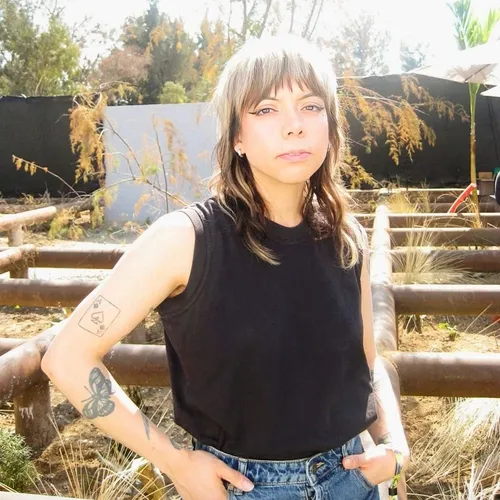
Hurray for the Riff Raff
ツアー中検証済み
フォロワー数 9.89万•近日開催予定の公演1件
あなたの都市で近日開催予定の公演はありません
Hurray for the Riff Raff にお住いの地域での公演リクエストを送る
公演をリクエスト
すべてのイベントとライブ配信
Hurray for the Riff Raff 物販

The Navigator
$22.56

The Past Is Still Alive
$11.47

LIFE ON EARTH
$15.08
 すべてを表示
Hurray for the Riff Raffのツアー
おすすめアーティスト
Hurray for the Riff Raffのコンサートを二度と見逃すことはありません。
無料のBandsintownアカウントでツアーの発表、コンサートチケット、お近くのショーに関するアラートを受け取りましょう。
Hurray for the Riff Raff について
Hurray for the Riff Raff
Alynda Segarra is 36, or a little less than halfway through the average American lifespan. In that comparatively brief time, though, the Hurray for the Riff Raff founder has been something of a modern Huck Finn, an itinerant traveler whose adventures prompt art that reminds us there are always other ways to live.
Born in the Bronx and of Puerto Rican heritage, Segarra was raised there by a blue-collar aunt and uncle, as their father navigated Vietnam trauma and their mother neglected them to work for the likes of Rudy Giuliani. They were radicalized before they were a teenager, baptized in the anti-war movement and galvanized in New York’s punk haunts and queer spaces. At 17, Segarra split, becoming the kid in a communal squat before shuttling to California, where they began crisscrossing the country by hopping trains. They eventually found home—spiritual, emotional, physical—in New Orleans, forming a hobo band and realizing that music was not only a way to share what they’d learned and seen but to learn and see more. Hurray for the Riff Raff steadily rose from house shows to a major label, where Segarra became a pan-everything fixture of the modern folk movement. But that yoke became a burden, prompting Segarra to make the probing and poignant electronic opus, 2022’s Life on Earth, their Nonesuch debut. Catch your breath, OK? We’re back to 36, back to now.
During the last dozen years, these manifold tales of Segarra’s voyages have shaped an oral folklore of sorts, with the teenage vagabonding or subsequent trainhopping becoming what some may hear about Hurray for the Riff Raff before hearing the music itself. Segarra has dropped tidbits in songs, too, but they always worried that their experiences were too radical, that memories of dumpster diving or riding through New Orleans with a dildo dangling on an antenna were too much. But on The Past Is Still Alive, Segarra finally tells the story themselves, speckling stirring reflections on love, loss, and the end or evolution of the United States with foundational scenes from their own life. “It felt like a trust fall, or a letting go of this idea of proving something to the music industry—how I can be more digestible, modifiable, sellable,” Segarra says. “I feel like I’m closer to what I actually have to share.”
There is, for instance, sex and communal musicmaking on an island of San Francisco trash during “Snake Plant (The Past Is Still Alive),” a charged attempt to reckon the erosion of our childhood innocence with a belief that a worthwhile future is still possible. Or there are the cops and the trains and the long walks down empty Nebraska highways to escape said cops during “Ogalla,” the cathartic closer that tries to maintain the spirit of the past while actually surviving in the now. The Past Is Still Alive is the record of Segarra’s life so far, not only because it chronicles the past to understand the present but also because it is the most singular and magnetic thing Hurray for the Riff Raff have yet made. A master work of modern folk-rock, The Past Is Still Alive resets the terms of that tired term.
In March 2023, when Segarra returned to the North Carolina studio of producer Brad Cook to cut The Past Is Still Alive, they weren’t so sure about the session, if they could even handle it. Only a month before, their father, Jose Enrico (Quico) Segarra, had died. A musician himself, he had long been fundamental to Segarra’s songs, a point of inspiration and encouragement. What’s more, Segarra had made Life on Earth with Cook, and drummer Yan Westerlund had long toured in Hurray for the Riff Raff. But much of the band they’d assembled for these sessions—guitarist Meg Duffy, fiddler Libby Rodenbough, saxophonist Matt Douglas, multi-instrumentalist Phil Cook—were unknown quantities. At the edge of catastrophe and in the headlock of grief, could Segarra share these bone-deep songs among strangers? “The songwriting is what drove me. I didn’t feel the need to try to transform,” Segarra reckons. “It felt like the truth of where I was at in my life—very vulnerable, very fair, very raw.”
Segarra simply let those complex feelings lead the way, hurling themselves into these excavations of memory and blueprints for what’s to come. Witness, for instance, the tensile resolve in opener “Alibi,” a yearning reflection on addicted childhood friends that pleads with them to join the land of the living while they still can. As the pedal steel moans beneath the snappy country shuffle, their voice frays, a testament to the way they’re bearing difficult witness. That call to survival returns in “Snake Plant,” a song so stuffed with specific childhood memories—scenes from family road trips to Florida, snapshots from discovering oneself on the edge of the world—that Segarra feels like an actual tour guide. “Test your drugs/remember Narcan,” they sing toward the end. “There’s a war on the people/What don’t you understand?” The demand is graceful and winning, not pedantic, lived-in advice from someone who has managed to live when so many friends have not.
This quest to live in spite of outside attempts to kill us off animates “Colossus of Roads,” at once the most devastating and uplifting entry in the entire Hurray for the Riff Raff catalogue. Written like an urgent dispatch after the Club Q shooting in Colorado, it is a paean to the outsiders, a love song for the vulnerable—the queer, the homeless, the radical. Their voice taut as a piece of barbed wire, Segarra deploys poet Eileen Myles and boxcar artist BuZ blurr (the Colossus of Roads himself) to suggest a sanctuary of solidarity for the dispossessed. The United States as we know it can and probably should dissolve, they seethe; as it all comes down, though, Segarra asks to “wrap you up in the bomb shelter of my feather bed.” Brilliantly written and rendered, it is an anthem for a dawning age of collective liberation. “I’ve only had this experience a couple of times, where a song falls on me—it’s all there, and I don’t do anything,” Segarra admits. “It felt like creating a space where all us outsiders can be safe together. That doesn’t exist, but it exists in our minds, and it exists in this song.”
Throughout The Past Is Still Alive, Segarra suggests the profound ability to navigate all this pain, chaos, and trauma, or at least to meet it with senses of wonder and want. To wit, the delightful “Buffalo” uses the iconic American mammal that Americans almost drove to extinction as a metaphor for a new love; can it survive the pressures of society? A duet with Conor Oberst, “The World Is Dangerous” is a heartbroken waltz that still offers to hold someone close, if and when they’re ready.
And even as Segarra tells the tale of the first trans women they ever met, Miss Jonathan in New Orleans, and the beatings they took during “Hawkmoon,” they seem to beam, advocating for a better world yet to come. “I’m becoming the kind of girl that they warned me about,” Segarra sings at the end with devilish aplomb, proud to be carrying on Miss Jonathan’s work of upending norms, whether by sharing Miss Jonathan’s story or simply taking up space for themselves and their own multitudes.
It is especially fraught these days to speak of art in terms of national identity, to flirt with a jingoism that has led to new autocrats and rekindled old wars. But in the best ways possible, The Past Is Still Alive is a distinctly American record, built on twin pillars of peril and promise that have forever been foundational to this country.
The wanderlust that leads to piñon fires near the pueblos of New Mexico’s high desert and all-night escapades in New Orleans. The independence that shapes communities of like-minded outcasts, looking after one another. The inequality that makes such enclaves essential, that makes one of us eat out of garbage and the other with a silver spoon: It is all tragically and beautifully bound inside The Past Is Still Alive. Just as Louise Erdrich has done of late with Native Americans, Lonnie Holley with African-Americans, and Julie Otsuka with Asian-Americans, Segarra expands the scope of American stories here, stretching a long-safeguarded circle to encompass outsiders forever on the fringes. “The past is still alive/The root of me lives in the ballast by the mainline,” Segarra sings at one point, sweeping their days of riding rails directly into whatever success they have found now. Hurray for the riff raff, indeed.
Born in the Bronx and of Puerto Rican heritage, Segarra was raised there by a blue-collar aunt and uncle, as their father navigated Vietnam trauma and their mother neglected them to work for the likes of Rudy Giuliani. They were radicalized before they were a teenager, baptized in the anti-war movement and galvanized in New York’s punk haunts and queer spaces. At 17, Segarra split, becoming the kid in a communal squat before shuttling to California, where they began crisscrossing the country by hopping trains. They eventually found home—spiritual, emotional, physical—in New Orleans, forming a hobo band and realizing that music was not only a way to share what they’d learned and seen but to learn and see more. Hurray for the Riff Raff steadily rose from house shows to a major label, where Segarra became a pan-everything fixture of the modern folk movement. But that yoke became a burden, prompting Segarra to make the probing and poignant electronic opus, 2022’s Life on Earth, their Nonesuch debut. Catch your breath, OK? We’re back to 36, back to now.
During the last dozen years, these manifold tales of Segarra’s voyages have shaped an oral folklore of sorts, with the teenage vagabonding or subsequent trainhopping becoming what some may hear about Hurray for the Riff Raff before hearing the music itself. Segarra has dropped tidbits in songs, too, but they always worried that their experiences were too radical, that memories of dumpster diving or riding through New Orleans with a dildo dangling on an antenna were too much. But on The Past Is Still Alive, Segarra finally tells the story themselves, speckling stirring reflections on love, loss, and the end or evolution of the United States with foundational scenes from their own life. “It felt like a trust fall, or a letting go of this idea of proving something to the music industry—how I can be more digestible, modifiable, sellable,” Segarra says. “I feel like I’m closer to what I actually have to share.”
There is, for instance, sex and communal musicmaking on an island of San Francisco trash during “Snake Plant (The Past Is Still Alive),” a charged attempt to reckon the erosion of our childhood innocence with a belief that a worthwhile future is still possible. Or there are the cops and the trains and the long walks down empty Nebraska highways to escape said cops during “Ogalla,” the cathartic closer that tries to maintain the spirit of the past while actually surviving in the now. The Past Is Still Alive is the record of Segarra’s life so far, not only because it chronicles the past to understand the present but also because it is the most singular and magnetic thing Hurray for the Riff Raff have yet made. A master work of modern folk-rock, The Past Is Still Alive resets the terms of that tired term.
In March 2023, when Segarra returned to the North Carolina studio of producer Brad Cook to cut The Past Is Still Alive, they weren’t so sure about the session, if they could even handle it. Only a month before, their father, Jose Enrico (Quico) Segarra, had died. A musician himself, he had long been fundamental to Segarra’s songs, a point of inspiration and encouragement. What’s more, Segarra had made Life on Earth with Cook, and drummer Yan Westerlund had long toured in Hurray for the Riff Raff. But much of the band they’d assembled for these sessions—guitarist Meg Duffy, fiddler Libby Rodenbough, saxophonist Matt Douglas, multi-instrumentalist Phil Cook—were unknown quantities. At the edge of catastrophe and in the headlock of grief, could Segarra share these bone-deep songs among strangers? “The songwriting is what drove me. I didn’t feel the need to try to transform,” Segarra reckons. “It felt like the truth of where I was at in my life—very vulnerable, very fair, very raw.”
Segarra simply let those complex feelings lead the way, hurling themselves into these excavations of memory and blueprints for what’s to come. Witness, for instance, the tensile resolve in opener “Alibi,” a yearning reflection on addicted childhood friends that pleads with them to join the land of the living while they still can. As the pedal steel moans beneath the snappy country shuffle, their voice frays, a testament to the way they’re bearing difficult witness. That call to survival returns in “Snake Plant,” a song so stuffed with specific childhood memories—scenes from family road trips to Florida, snapshots from discovering oneself on the edge of the world—that Segarra feels like an actual tour guide. “Test your drugs/remember Narcan,” they sing toward the end. “There’s a war on the people/What don’t you understand?” The demand is graceful and winning, not pedantic, lived-in advice from someone who has managed to live when so many friends have not.
This quest to live in spite of outside attempts to kill us off animates “Colossus of Roads,” at once the most devastating and uplifting entry in the entire Hurray for the Riff Raff catalogue. Written like an urgent dispatch after the Club Q shooting in Colorado, it is a paean to the outsiders, a love song for the vulnerable—the queer, the homeless, the radical. Their voice taut as a piece of barbed wire, Segarra deploys poet Eileen Myles and boxcar artist BuZ blurr (the Colossus of Roads himself) to suggest a sanctuary of solidarity for the dispossessed. The United States as we know it can and probably should dissolve, they seethe; as it all comes down, though, Segarra asks to “wrap you up in the bomb shelter of my feather bed.” Brilliantly written and rendered, it is an anthem for a dawning age of collective liberation. “I’ve only had this experience a couple of times, where a song falls on me—it’s all there, and I don’t do anything,” Segarra admits. “It felt like creating a space where all us outsiders can be safe together. That doesn’t exist, but it exists in our minds, and it exists in this song.”
Throughout The Past Is Still Alive, Segarra suggests the profound ability to navigate all this pain, chaos, and trauma, or at least to meet it with senses of wonder and want. To wit, the delightful “Buffalo” uses the iconic American mammal that Americans almost drove to extinction as a metaphor for a new love; can it survive the pressures of society? A duet with Conor Oberst, “The World Is Dangerous” is a heartbroken waltz that still offers to hold someone close, if and when they’re ready.
And even as Segarra tells the tale of the first trans women they ever met, Miss Jonathan in New Orleans, and the beatings they took during “Hawkmoon,” they seem to beam, advocating for a better world yet to come. “I’m becoming the kind of girl that they warned me about,” Segarra sings at the end with devilish aplomb, proud to be carrying on Miss Jonathan’s work of upending norms, whether by sharing Miss Jonathan’s story or simply taking up space for themselves and their own multitudes.
It is especially fraught these days to speak of art in terms of national identity, to flirt with a jingoism that has led to new autocrats and rekindled old wars. But in the best ways possible, The Past Is Still Alive is a distinctly American record, built on twin pillars of peril and promise that have forever been foundational to this country.
The wanderlust that leads to piñon fires near the pueblos of New Mexico’s high desert and all-night escapades in New Orleans. The independence that shapes communities of like-minded outcasts, looking after one another. The inequality that makes such enclaves essential, that makes one of us eat out of garbage and the other with a silver spoon: It is all tragically and beautifully bound inside The Past Is Still Alive. Just as Louise Erdrich has done of late with Native Americans, Lonnie Holley with African-Americans, and Julie Otsuka with Asian-Americans, Segarra expands the scope of American stories here, stretching a long-safeguarded circle to encompass outsiders forever on the fringes. “The past is still alive/The root of me lives in the ballast by the mainline,” Segarra sings at one point, sweeping their days of riding rails directly into whatever success they have found now. Hurray for the riff raff, indeed.
表示を増やす
ジャンル:
Rock, Alternative, Folk
あなたの都市で近日開催予定の公演はありません
Hurray for the Riff Raff にお住いの地域での公演リクエストを送る
公演をリクエスト
すべてのイベントとライブ配信
Hurray for the Riff Raff 物販
The Navigator
$22.56
The Past Is Still Alive
$11.47
LIFE ON EARTH
$15.08
すべてを表示Hurray for the Riff Raffのツアー
Hurray for the Riff Raff について
Hurray for the Riff Raff
Alynda Segarra is 36, or a little less than halfway through the average American lifespan. In that comparatively brief time, though, the Hurray for the Riff Raff founder has been something of a modern Huck Finn, an itinerant traveler whose adventures prompt art that reminds us there are always other ways to live.
Born in the Bronx and of Puerto Rican heritage, Segarra was raised there by a blue-collar aunt and uncle, as their father navigated Vietnam trauma and their mother neglected them to work for the likes of Rudy Giuliani. They were radicalized before they were a teenager, baptized in the anti-war movement and galvanized in New York’s punk haunts and queer spaces. At 17, Segarra split, becoming the kid in a communal squat before shuttling to California, where they began crisscrossing the country by hopping trains. They eventually found home—spiritual, emotional, physical—in New Orleans, forming a hobo band and realizing that music was not only a way to share what they’d learned and seen but to learn and see more. Hurray for the Riff Raff steadily rose from house shows to a major label, where Segarra became a pan-everything fixture of the modern folk movement. But that yoke became a burden, prompting Segarra to make the probing and poignant electronic opus, 2022’s Life on Earth, their Nonesuch debut. Catch your breath, OK? We’re back to 36, back to now.
During the last dozen years, these manifold tales of Segarra’s voyages have shaped an oral folklore of sorts, with the teenage vagabonding or subsequent trainhopping becoming what some may hear about Hurray for the Riff Raff before hearing the music itself. Segarra has dropped tidbits in songs, too, but they always worried that their experiences were too radical, that memories of dumpster diving or riding through New Orleans with a dildo dangling on an antenna were too much. But on The Past Is Still Alive, Segarra finally tells the story themselves, speckling stirring reflections on love, loss, and the end or evolution of the United States with foundational scenes from their own life. “It felt like a trust fall, or a letting go of this idea of proving something to the music industry—how I can be more digestible, modifiable, sellable,” Segarra says. “I feel like I’m closer to what I actually have to share.”
There is, for instance, sex and communal musicmaking on an island of San Francisco trash during “Snake Plant (The Past Is Still Alive),” a charged attempt to reckon the erosion of our childhood innocence with a belief that a worthwhile future is still possible. Or there are the cops and the trains and the long walks down empty Nebraska highways to escape said cops during “Ogalla,” the cathartic closer that tries to maintain the spirit of the past while actually surviving in the now. The Past Is Still Alive is the record of Segarra’s life so far, not only because it chronicles the past to understand the present but also because it is the most singular and magnetic thing Hurray for the Riff Raff have yet made. A master work of modern folk-rock, The Past Is Still Alive resets the terms of that tired term.
In March 2023, when Segarra returned to the North Carolina studio of producer Brad Cook to cut The Past Is Still Alive, they weren’t so sure about the session, if they could even handle it. Only a month before, their father, Jose Enrico (Quico) Segarra, had died. A musician himself, he had long been fundamental to Segarra’s songs, a point of inspiration and encouragement. What’s more, Segarra had made Life on Earth with Cook, and drummer Yan Westerlund had long toured in Hurray for the Riff Raff. But much of the band they’d assembled for these sessions—guitarist Meg Duffy, fiddler Libby Rodenbough, saxophonist Matt Douglas, multi-instrumentalist Phil Cook—were unknown quantities. At the edge of catastrophe and in the headlock of grief, could Segarra share these bone-deep songs among strangers? “The songwriting is what drove me. I didn’t feel the need to try to transform,” Segarra reckons. “It felt like the truth of where I was at in my life—very vulnerable, very fair, very raw.”
Segarra simply let those complex feelings lead the way, hurling themselves into these excavations of memory and blueprints for what’s to come. Witness, for instance, the tensile resolve in opener “Alibi,” a yearning reflection on addicted childhood friends that pleads with them to join the land of the living while they still can. As the pedal steel moans beneath the snappy country shuffle, their voice frays, a testament to the way they’re bearing difficult witness. That call to survival returns in “Snake Plant,” a song so stuffed with specific childhood memories—scenes from family road trips to Florida, snapshots from discovering oneself on the edge of the world—that Segarra feels like an actual tour guide. “Test your drugs/remember Narcan,” they sing toward the end. “There’s a war on the people/What don’t you understand?” The demand is graceful and winning, not pedantic, lived-in advice from someone who has managed to live when so many friends have not.
This quest to live in spite of outside attempts to kill us off animates “Colossus of Roads,” at once the most devastating and uplifting entry in the entire Hurray for the Riff Raff catalogue. Written like an urgent dispatch after the Club Q shooting in Colorado, it is a paean to the outsiders, a love song for the vulnerable—the queer, the homeless, the radical. Their voice taut as a piece of barbed wire, Segarra deploys poet Eileen Myles and boxcar artist BuZ blurr (the Colossus of Roads himself) to suggest a sanctuary of solidarity for the dispossessed. The United States as we know it can and probably should dissolve, they seethe; as it all comes down, though, Segarra asks to “wrap you up in the bomb shelter of my feather bed.” Brilliantly written and rendered, it is an anthem for a dawning age of collective liberation. “I’ve only had this experience a couple of times, where a song falls on me—it’s all there, and I don’t do anything,” Segarra admits. “It felt like creating a space where all us outsiders can be safe together. That doesn’t exist, but it exists in our minds, and it exists in this song.”
Throughout The Past Is Still Alive, Segarra suggests the profound ability to navigate all this pain, chaos, and trauma, or at least to meet it with senses of wonder and want. To wit, the delightful “Buffalo” uses the iconic American mammal that Americans almost drove to extinction as a metaphor for a new love; can it survive the pressures of society? A duet with Conor Oberst, “The World Is Dangerous” is a heartbroken waltz that still offers to hold someone close, if and when they’re ready.
And even as Segarra tells the tale of the first trans women they ever met, Miss Jonathan in New Orleans, and the beatings they took during “Hawkmoon,” they seem to beam, advocating for a better world yet to come. “I’m becoming the kind of girl that they warned me about,” Segarra sings at the end with devilish aplomb, proud to be carrying on Miss Jonathan’s work of upending norms, whether by sharing Miss Jonathan’s story or simply taking up space for themselves and their own multitudes.
It is especially fraught these days to speak of art in terms of national identity, to flirt with a jingoism that has led to new autocrats and rekindled old wars. But in the best ways possible, The Past Is Still Alive is a distinctly American record, built on twin pillars of peril and promise that have forever been foundational to this country.
The wanderlust that leads to piñon fires near the pueblos of New Mexico’s high desert and all-night escapades in New Orleans. The independence that shapes communities of like-minded outcasts, looking after one another. The inequality that makes such enclaves essential, that makes one of us eat out of garbage and the other with a silver spoon: It is all tragically and beautifully bound inside The Past Is Still Alive. Just as Louise Erdrich has done of late with Native Americans, Lonnie Holley with African-Americans, and Julie Otsuka with Asian-Americans, Segarra expands the scope of American stories here, stretching a long-safeguarded circle to encompass outsiders forever on the fringes. “The past is still alive/The root of me lives in the ballast by the mainline,” Segarra sings at one point, sweeping their days of riding rails directly into whatever success they have found now. Hurray for the riff raff, indeed.
Born in the Bronx and of Puerto Rican heritage, Segarra was raised there by a blue-collar aunt and uncle, as their father navigated Vietnam trauma and their mother neglected them to work for the likes of Rudy Giuliani. They were radicalized before they were a teenager, baptized in the anti-war movement and galvanized in New York’s punk haunts and queer spaces. At 17, Segarra split, becoming the kid in a communal squat before shuttling to California, where they began crisscrossing the country by hopping trains. They eventually found home—spiritual, emotional, physical—in New Orleans, forming a hobo band and realizing that music was not only a way to share what they’d learned and seen but to learn and see more. Hurray for the Riff Raff steadily rose from house shows to a major label, where Segarra became a pan-everything fixture of the modern folk movement. But that yoke became a burden, prompting Segarra to make the probing and poignant electronic opus, 2022’s Life on Earth, their Nonesuch debut. Catch your breath, OK? We’re back to 36, back to now.
During the last dozen years, these manifold tales of Segarra’s voyages have shaped an oral folklore of sorts, with the teenage vagabonding or subsequent trainhopping becoming what some may hear about Hurray for the Riff Raff before hearing the music itself. Segarra has dropped tidbits in songs, too, but they always worried that their experiences were too radical, that memories of dumpster diving or riding through New Orleans with a dildo dangling on an antenna were too much. But on The Past Is Still Alive, Segarra finally tells the story themselves, speckling stirring reflections on love, loss, and the end or evolution of the United States with foundational scenes from their own life. “It felt like a trust fall, or a letting go of this idea of proving something to the music industry—how I can be more digestible, modifiable, sellable,” Segarra says. “I feel like I’m closer to what I actually have to share.”
There is, for instance, sex and communal musicmaking on an island of San Francisco trash during “Snake Plant (The Past Is Still Alive),” a charged attempt to reckon the erosion of our childhood innocence with a belief that a worthwhile future is still possible. Or there are the cops and the trains and the long walks down empty Nebraska highways to escape said cops during “Ogalla,” the cathartic closer that tries to maintain the spirit of the past while actually surviving in the now. The Past Is Still Alive is the record of Segarra’s life so far, not only because it chronicles the past to understand the present but also because it is the most singular and magnetic thing Hurray for the Riff Raff have yet made. A master work of modern folk-rock, The Past Is Still Alive resets the terms of that tired term.
In March 2023, when Segarra returned to the North Carolina studio of producer Brad Cook to cut The Past Is Still Alive, they weren’t so sure about the session, if they could even handle it. Only a month before, their father, Jose Enrico (Quico) Segarra, had died. A musician himself, he had long been fundamental to Segarra’s songs, a point of inspiration and encouragement. What’s more, Segarra had made Life on Earth with Cook, and drummer Yan Westerlund had long toured in Hurray for the Riff Raff. But much of the band they’d assembled for these sessions—guitarist Meg Duffy, fiddler Libby Rodenbough, saxophonist Matt Douglas, multi-instrumentalist Phil Cook—were unknown quantities. At the edge of catastrophe and in the headlock of grief, could Segarra share these bone-deep songs among strangers? “The songwriting is what drove me. I didn’t feel the need to try to transform,” Segarra reckons. “It felt like the truth of where I was at in my life—very vulnerable, very fair, very raw.”
Segarra simply let those complex feelings lead the way, hurling themselves into these excavations of memory and blueprints for what’s to come. Witness, for instance, the tensile resolve in opener “Alibi,” a yearning reflection on addicted childhood friends that pleads with them to join the land of the living while they still can. As the pedal steel moans beneath the snappy country shuffle, their voice frays, a testament to the way they’re bearing difficult witness. That call to survival returns in “Snake Plant,” a song so stuffed with specific childhood memories—scenes from family road trips to Florida, snapshots from discovering oneself on the edge of the world—that Segarra feels like an actual tour guide. “Test your drugs/remember Narcan,” they sing toward the end. “There’s a war on the people/What don’t you understand?” The demand is graceful and winning, not pedantic, lived-in advice from someone who has managed to live when so many friends have not.
This quest to live in spite of outside attempts to kill us off animates “Colossus of Roads,” at once the most devastating and uplifting entry in the entire Hurray for the Riff Raff catalogue. Written like an urgent dispatch after the Club Q shooting in Colorado, it is a paean to the outsiders, a love song for the vulnerable—the queer, the homeless, the radical. Their voice taut as a piece of barbed wire, Segarra deploys poet Eileen Myles and boxcar artist BuZ blurr (the Colossus of Roads himself) to suggest a sanctuary of solidarity for the dispossessed. The United States as we know it can and probably should dissolve, they seethe; as it all comes down, though, Segarra asks to “wrap you up in the bomb shelter of my feather bed.” Brilliantly written and rendered, it is an anthem for a dawning age of collective liberation. “I’ve only had this experience a couple of times, where a song falls on me—it’s all there, and I don’t do anything,” Segarra admits. “It felt like creating a space where all us outsiders can be safe together. That doesn’t exist, but it exists in our minds, and it exists in this song.”
Throughout The Past Is Still Alive, Segarra suggests the profound ability to navigate all this pain, chaos, and trauma, or at least to meet it with senses of wonder and want. To wit, the delightful “Buffalo” uses the iconic American mammal that Americans almost drove to extinction as a metaphor for a new love; can it survive the pressures of society? A duet with Conor Oberst, “The World Is Dangerous” is a heartbroken waltz that still offers to hold someone close, if and when they’re ready.
And even as Segarra tells the tale of the first trans women they ever met, Miss Jonathan in New Orleans, and the beatings they took during “Hawkmoon,” they seem to beam, advocating for a better world yet to come. “I’m becoming the kind of girl that they warned me about,” Segarra sings at the end with devilish aplomb, proud to be carrying on Miss Jonathan’s work of upending norms, whether by sharing Miss Jonathan’s story or simply taking up space for themselves and their own multitudes.
It is especially fraught these days to speak of art in terms of national identity, to flirt with a jingoism that has led to new autocrats and rekindled old wars. But in the best ways possible, The Past Is Still Alive is a distinctly American record, built on twin pillars of peril and promise that have forever been foundational to this country.
The wanderlust that leads to piñon fires near the pueblos of New Mexico’s high desert and all-night escapades in New Orleans. The independence that shapes communities of like-minded outcasts, looking after one another. The inequality that makes such enclaves essential, that makes one of us eat out of garbage and the other with a silver spoon: It is all tragically and beautifully bound inside The Past Is Still Alive. Just as Louise Erdrich has done of late with Native Americans, Lonnie Holley with African-Americans, and Julie Otsuka with Asian-Americans, Segarra expands the scope of American stories here, stretching a long-safeguarded circle to encompass outsiders forever on the fringes. “The past is still alive/The root of me lives in the ballast by the mainline,” Segarra sings at one point, sweeping their days of riding rails directly into whatever success they have found now. Hurray for the riff raff, indeed.
表示を増やす
ジャンル:
Rock, Alternative, Folk
おすすめアーティスト
Hurray for the Riff Raffのコンサートを二度と見逃すことはありません。
無料のBandsintownアカウントでツアーの発表、コンサートチケット、お近くのショーに関するアラートを受け取りましょう。
Bandsintown アプリで最高の体験をお楽しみください。

ライブ写真


ファンの声
The folks who waited out the rain delay on line before the venue opened were rewarded with a truly special show. As a Bronx native, who got her first exposure to the music that would become her greatest influences at the Lincoln Center Library, playing for the first time on the legendary campus clearly meant a lot to Alinda. The dance floor stage is one of the prettiest festival stages I’ve ever seen and the sound is amazing . The members of the audience that were not Alinda’s friends and family were all serious fans of the music. The weather mostly held and as I always say, anyone can have fun in the sun, but those shows don’t necessarily stick in the memory.. The rainy shows are the ones you remember. All in all a magical eve.
2026年8月7日·New York, NY

Daniel
Excellent performance from an outstanding Chicago based band! I only wished they had played Precious Cargo, one of my favorites. 🙏🏻
2026年7月13日·Chicago, IL

Daniel
Excellent show, powerful woman not afraid to speak truth to power. You go girl.
2025年10月20日·Chicago, IL

Todd


ライブ写真
ファンの声
The folks who waited out the rain delay on line before the venue opened were rewarded with a truly special show. As a Bronx native, who got her first exposure to the music that would become her greatest influences at the Lincoln Center Library, playing for the first time on the legendary campus clearly meant a lot to Alinda. The dance floor stage is one of the prettiest festival stages I’ve ever seen and the sound is amazing . The members of the audience that were not Alinda’s friends and family were all serious fans of the music. The weather mostly held and as I always say, anyone can have fun in the sun, but those shows don’t necessarily stick in the memory.. The rainy shows are the ones you remember. All in all a magical eve.
2026年8月7日·New York, NY
Daniel
Excellent performance from an outstanding Chicago based band! I only wished they had played Precious Cargo, one of my favorites. 🙏🏻
2026年7月13日·Chicago, IL
Daniel
Excellent show, powerful woman not afraid to speak truth to power. You go girl.
2025年10月20日·Chicago, IL
Todd