Vous avez des bons goûts !
Connectez-vous pour suivre vos artistes favoris, sauvegarder des événements, & plus encore.
Trouvez des dates de tournée et des événements musicaux live pour tous vos groupes et artistes préférés dans votre ville. Obtenez des billets de concert et des actualités, et envoyez des RSVP aux concerts avec Bandsintown.

'%3e %3cpath d='M17.2 8.65233C17.2 3.87262 13.3508 0 8.6 0C3.84919 0 0 3.87262 0 8.65233C0 12.9785 3.12097 16.572 7.24758 17.2V11.1643H5.0629V8.65233H7.24758V6.76836C7.24758 4.60527 8.53065 3.38418 10.4726 3.38418C11.4435 3.38418 12.4145 3.55862 12.4145 3.55862V5.68682H11.3395C10.2645 5.68682 9.91774 6.3497 9.91774 7.04746V8.65233H12.3105L11.929 11.1643H9.91774V17.2C14.0444 16.572 17.2 12.9785 17.2 8.65233Z' fill='%236D6D6D'/%3e %3c/g%3e %3cdefs%3e %3cclipPath id='clip0_11991_110375'%3e %3crect width='17.2' height='17.2' fill='white'/%3e %3c/clipPath%3e %3c/defs%3e %3c/svg%3e)
'%3e %3cpath d='M13.546 0.716797H16.1835L10.4214 7.3954L17.2 16.4835H11.8924L7.73534 10.9716L2.97869 16.4835H0.339647L6.50272 9.33995L0 0.716797H5.44232L9.19996 5.75485L13.546 0.716797ZM12.6204 14.8825H14.0818L4.64822 2.23363H3.07994L12.6204 14.8825Z' fill='%236D6D6D'/%3e %3c/g%3e %3cdefs%3e %3cclipPath id='clip0_11991_110380'%3e %3crect width='17.2' height='17.2' fill='white'/%3e %3c/clipPath%3e %3c/defs%3e %3c/svg%3e)
'%3e %3cpath d='M8.6192 4.16563C6.16205 4.16563 4.20402 6.16205 4.20402 8.5808C4.20402 11.0379 6.16205 12.996 8.6192 12.996C11.0379 12.996 13.0344 11.0379 13.0344 8.5808C13.0344 6.16205 11.0379 4.16563 8.6192 4.16563ZM8.6192 11.4603C7.04509 11.4603 5.73973 10.1933 5.73973 8.5808C5.73973 7.0067 7.0067 5.73973 8.6192 5.73973C10.1933 5.73973 11.4603 7.0067 11.4603 8.5808C11.4603 10.1933 10.1933 11.4603 8.6192 11.4603ZM14.2246 4.01205C14.2246 4.58795 13.7638 5.04866 13.1879 5.04866C12.6121 5.04866 12.1513 4.58795 12.1513 4.01205C12.1513 3.43616 12.6121 2.97545 13.1879 2.97545C13.7638 2.97545 14.2246 3.43616 14.2246 4.01205ZM17.1424 5.04866C17.0656 3.66652 16.7585 2.43795 15.7603 1.43973C14.7621 0.441518 13.5335 0.134375 12.1513 0.0575893C10.7308 -0.0191964 6.4692 -0.0191964 5.04866 0.0575893C3.66652 0.134375 2.47634 0.441518 1.43973 1.43973C0.441518 2.43795 0.134375 3.66652 0.0575893 5.04866C-0.0191964 6.4692 -0.0191964 10.7308 0.0575893 12.1513C0.134375 13.5335 0.441518 14.7237 1.43973 15.7603C2.47634 16.7585 3.66652 17.0656 5.04866 17.1424C6.4692 17.2192 10.7308 17.2192 12.1513 17.1424C13.5335 17.0656 14.7621 16.7585 15.7603 15.7603C16.7585 14.7237 17.0656 13.5335 17.1424 12.1513C17.2192 10.7308 17.2192 6.4692 17.1424 5.04866ZM15.2996 13.6487C15.0308 14.4165 14.4165 14.9924 13.6871 15.2996C12.5353 15.7603 9.84777 15.6451 8.6192 15.6451C7.35223 15.6451 4.66473 15.7603 3.55134 15.2996C2.78348 14.9924 2.20759 14.4165 1.90045 13.6487C1.43973 12.5353 1.55491 9.84777 1.55491 8.5808C1.55491 7.35223 1.43973 4.66473 1.90045 3.51295C2.20759 2.78348 2.78348 2.20759 3.55134 1.90045C4.66473 1.43973 7.35223 1.55491 8.6192 1.55491C9.84777 1.55491 12.5353 1.43973 13.6871 1.90045C14.4165 2.1692 14.9924 2.78348 15.2996 3.51295C15.7603 4.66473 15.6451 7.35223 15.6451 8.5808C15.6451 9.84777 15.7603 12.5353 15.2996 13.6487Z' fill='%236D6D6D'/%3e %3c/g%3e %3cdefs%3e %3cclipPath id='clip0_11991_110387'%3e %3crect width='17.2' height='17.2' fill='white'/%3e %3c/clipPath%3e %3c/defs%3e %3c/svg%3e)


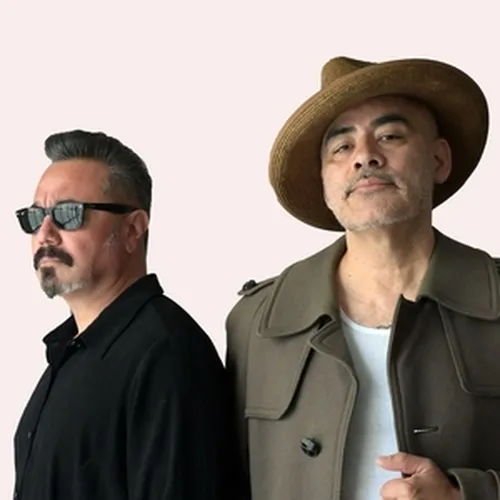
artiste
Los Yesterdays
En tournéeVérifié
14,8 k Fans•3 spectacles à venir
Aucun événement à venir dans votre ville
Demandez à Los Yesterdays de venir jouer dans votre ville
Envoyer une demande
Tous les concerts et diffusions live
Tournée de Los Yesterdays
Les fans suivent aussi
Ne ratez plus jamais un concert de Los Yesterdays.
Recevez des alertes sur les annonces de tournée, les billets de concert et les spectacles près de chez vous avec un compte Bandsintown gratuit.
A propos de Los Yesterdays
Los Yesterdays
Los Yesterdays are a Chicano soul band from Los Angeles based around the creative collaboration between Gabriel Rowland and Victor Benavides. They began working together when Rowland - a drummer by trade, then creaky and exhausted from waking up at dawn to work construction - decided to channel those struggles into song. He contacted Benavides, a former bandmate of Rowland’s deceased brother, to record the soul ballads that Southland Chicanos call “oldies,” the best of Black American sweet soul music from the 60s, 70s and early 80s. The Chicano obsession with soul music began in the mid 1950s, when young Chicanos, many of whom were first-generation immigrants raised on their parents’ mariachi and norteño records, were searching for a music of their own. They began in the smog-spitting gas guzzlers and carpeted living rooms and shoe-melting playground blacktop of the 1970s.
“All my cousins in Compton were much older, and we'd listen to LPs in the garage while playing in the yard. Pops always had vinyl around the crib, generally bumping ‘60s and early ‘70s soul. He loved to drive and act out funny lyrics from The Coasters at us,” Rowland remembers. “Soul music was everywhere. At my grade school we could bring our own seven-inches to school, and this one girl not interested in playing would go through the stack during lunch. You'd keep an ear out for your group while playing tackle football on the pavement.”
For parents like those of Rowland, who was raised between South Central and East Los Angeles, and Benavides, reared by migrant workers in Selma, California, a dusty little farm town about 20 minutes south of Fresno, this period of soul (and funk and rock ‘n’ roll) spoke to their Americanized, romantic, and often violent lives in mixed-race barrios. Racist governance and ensuing socio-economic conditions put Mexicans and Blacks in direct proximity––and often conflict––with each other, and from this mixed-race Califas milieu came Chicano groups like Thee Midniters and Cannibal & the Headhunters, Black artists with massive Chicano followings like The Coasters and Brenton Wood, and hyper-influential radio hosts like Dick “Huggy Boy” Hugg (who was white) and Art Laboe (a first-generation Armenian-American, real name Artur Egnoian).
“Poor don't know culture or color. When you're poor, you live in the barrio or ghetto or whatever you want to call it,” Benavides says. “There's Blacks, Latinos, whites, Asians, whatever. That's what you can afford, so you live there. Eventually, you end up making friends because you need an extra player on a streetball team or whatever. You go to their houses and eat what they eat and listen to what they listen to. It's funny. I never thought about it but It's a cultural exchange program for poor people!”
“The gente fell in love with that romantic, sweet soul sound,” Rowland adds. “Since then it never left our cultura, it became a part of how we identify ourselves. The pride we take in our day-to-day hustle, our clothing, food, and cars somehow naturally merged with the pride our brothers and sisters took in that music. The African-American community is so inexhaustibly creative, they had to move on. But, somehow we felt it important to hold on to those blissful days cruising, eating, and dancing.”
It’s true that Black musicians moved on from the doe-eyed sweet soul typical of the ‘60s and early ‘70s, but so did young, Chicano artists––the demands of psychedelia and the Civil Rights Movement required a generation of long-hairs (or voluminous-hairs, in the case of afros) to eschew kissy-face ballads in favor of extended jams and self-empowerment anthems. Although the musicians who performed those lush, romantic hits moved on, affinity for that era of music has proved incredibly durable. The feelings that oldies inspire and were inspired by––love, heartbreak, yearning, jealousy, regret––the whole scope of being plum fucked up and out on your ass––are universal and cross-generational. On their formal debut, Frozen In Time, Los Yesterdays pay yearning, bleeding-heart homage to groups like Tejano brown-eyed soul legends Sunny & The Sunliners and the aforementioned Midniters, a group of East Los Angeles teens whose frequently genre-agnostic work added a Chicano lilt to Black art. Like compas Thee Sacred Souls and Thee Sinseers, theirs is a new-old music.
“I do find the music to be immersed in the past,” Rowland admits. “The musicians [of the past] could really play, and the writers could truly compose beautiful pieces…The Beatles and the rest of non-Black writers were constantly biting from this fruitful tree, as we continue to do ourselves.”
On songs like “Loves Is A Game For Fools” and surprise TikTok hit “Nobody’s Clown,” Los Yesterdays filter love-struck R&B crooning through guitar-strumming Mexican balladeering; the result is something that sounds like the Los Angeles of yesterday and today––the indelible, immovable Los Angeles of cruising Whittier Boulevard, of cold drinks on the porch on blazing summer nights, of watching a blue-orange toxic sunset and wondering if they are thinking about you. Los Angeles changes; Los Angeles stays the same. Los Yesterdays have changed, outgrown their childhood barrios and the bands of their early 20s and their private garage hermitude; Los Yesterdays are Frozen In Time.
“All my cousins in Compton were much older, and we'd listen to LPs in the garage while playing in the yard. Pops always had vinyl around the crib, generally bumping ‘60s and early ‘70s soul. He loved to drive and act out funny lyrics from The Coasters at us,” Rowland remembers. “Soul music was everywhere. At my grade school we could bring our own seven-inches to school, and this one girl not interested in playing would go through the stack during lunch. You'd keep an ear out for your group while playing tackle football on the pavement.”
For parents like those of Rowland, who was raised between South Central and East Los Angeles, and Benavides, reared by migrant workers in Selma, California, a dusty little farm town about 20 minutes south of Fresno, this period of soul (and funk and rock ‘n’ roll) spoke to their Americanized, romantic, and often violent lives in mixed-race barrios. Racist governance and ensuing socio-economic conditions put Mexicans and Blacks in direct proximity––and often conflict––with each other, and from this mixed-race Califas milieu came Chicano groups like Thee Midniters and Cannibal & the Headhunters, Black artists with massive Chicano followings like The Coasters and Brenton Wood, and hyper-influential radio hosts like Dick “Huggy Boy” Hugg (who was white) and Art Laboe (a first-generation Armenian-American, real name Artur Egnoian).
“Poor don't know culture or color. When you're poor, you live in the barrio or ghetto or whatever you want to call it,” Benavides says. “There's Blacks, Latinos, whites, Asians, whatever. That's what you can afford, so you live there. Eventually, you end up making friends because you need an extra player on a streetball team or whatever. You go to their houses and eat what they eat and listen to what they listen to. It's funny. I never thought about it but It's a cultural exchange program for poor people!”
“The gente fell in love with that romantic, sweet soul sound,” Rowland adds. “Since then it never left our cultura, it became a part of how we identify ourselves. The pride we take in our day-to-day hustle, our clothing, food, and cars somehow naturally merged with the pride our brothers and sisters took in that music. The African-American community is so inexhaustibly creative, they had to move on. But, somehow we felt it important to hold on to those blissful days cruising, eating, and dancing.”
It’s true that Black musicians moved on from the doe-eyed sweet soul typical of the ‘60s and early ‘70s, but so did young, Chicano artists––the demands of psychedelia and the Civil Rights Movement required a generation of long-hairs (or voluminous-hairs, in the case of afros) to eschew kissy-face ballads in favor of extended jams and self-empowerment anthems. Although the musicians who performed those lush, romantic hits moved on, affinity for that era of music has proved incredibly durable. The feelings that oldies inspire and were inspired by––love, heartbreak, yearning, jealousy, regret––the whole scope of being plum fucked up and out on your ass––are universal and cross-generational. On their formal debut, Frozen In Time, Los Yesterdays pay yearning, bleeding-heart homage to groups like Tejano brown-eyed soul legends Sunny & The Sunliners and the aforementioned Midniters, a group of East Los Angeles teens whose frequently genre-agnostic work added a Chicano lilt to Black art. Like compas Thee Sacred Souls and Thee Sinseers, theirs is a new-old music.
“I do find the music to be immersed in the past,” Rowland admits. “The musicians [of the past] could really play, and the writers could truly compose beautiful pieces…The Beatles and the rest of non-Black writers were constantly biting from this fruitful tree, as we continue to do ourselves.”
On songs like “Loves Is A Game For Fools” and surprise TikTok hit “Nobody’s Clown,” Los Yesterdays filter love-struck R&B crooning through guitar-strumming Mexican balladeering; the result is something that sounds like the Los Angeles of yesterday and today––the indelible, immovable Los Angeles of cruising Whittier Boulevard, of cold drinks on the porch on blazing summer nights, of watching a blue-orange toxic sunset and wondering if they are thinking about you. Los Angeles changes; Los Angeles stays the same. Los Yesterdays have changed, outgrown their childhood barrios and the bands of their early 20s and their private garage hermitude; Los Yesterdays are Frozen In Time.
Afficher plus
Genres:
Oldies, Latin, Pop
Ville:
Los Angeles, California
Aucun événement à venir dans votre ville
Demandez à Los Yesterdays de venir jouer dans votre ville
Envoyer une demande
Tous les concerts et diffusions live
Tournée de Los Yesterdays
A propos de Los Yesterdays
Los Yesterdays
Los Yesterdays are a Chicano soul band from Los Angeles based around the creative collaboration between Gabriel Rowland and Victor Benavides. They began working together when Rowland - a drummer by trade, then creaky and exhausted from waking up at dawn to work construction - decided to channel those struggles into song. He contacted Benavides, a former bandmate of Rowland’s deceased brother, to record the soul ballads that Southland Chicanos call “oldies,” the best of Black American sweet soul music from the 60s, 70s and early 80s. The Chicano obsession with soul music began in the mid 1950s, when young Chicanos, many of whom were first-generation immigrants raised on their parents’ mariachi and norteño records, were searching for a music of their own. They began in the smog-spitting gas guzzlers and carpeted living rooms and shoe-melting playground blacktop of the 1970s.
“All my cousins in Compton were much older, and we'd listen to LPs in the garage while playing in the yard. Pops always had vinyl around the crib, generally bumping ‘60s and early ‘70s soul. He loved to drive and act out funny lyrics from The Coasters at us,” Rowland remembers. “Soul music was everywhere. At my grade school we could bring our own seven-inches to school, and this one girl not interested in playing would go through the stack during lunch. You'd keep an ear out for your group while playing tackle football on the pavement.”
For parents like those of Rowland, who was raised between South Central and East Los Angeles, and Benavides, reared by migrant workers in Selma, California, a dusty little farm town about 20 minutes south of Fresno, this period of soul (and funk and rock ‘n’ roll) spoke to their Americanized, romantic, and often violent lives in mixed-race barrios. Racist governance and ensuing socio-economic conditions put Mexicans and Blacks in direct proximity––and often conflict––with each other, and from this mixed-race Califas milieu came Chicano groups like Thee Midniters and Cannibal & the Headhunters, Black artists with massive Chicano followings like The Coasters and Brenton Wood, and hyper-influential radio hosts like Dick “Huggy Boy” Hugg (who was white) and Art Laboe (a first-generation Armenian-American, real name Artur Egnoian).
“Poor don't know culture or color. When you're poor, you live in the barrio or ghetto or whatever you want to call it,” Benavides says. “There's Blacks, Latinos, whites, Asians, whatever. That's what you can afford, so you live there. Eventually, you end up making friends because you need an extra player on a streetball team or whatever. You go to their houses and eat what they eat and listen to what they listen to. It's funny. I never thought about it but It's a cultural exchange program for poor people!”
“The gente fell in love with that romantic, sweet soul sound,” Rowland adds. “Since then it never left our cultura, it became a part of how we identify ourselves. The pride we take in our day-to-day hustle, our clothing, food, and cars somehow naturally merged with the pride our brothers and sisters took in that music. The African-American community is so inexhaustibly creative, they had to move on. But, somehow we felt it important to hold on to those blissful days cruising, eating, and dancing.”
It’s true that Black musicians moved on from the doe-eyed sweet soul typical of the ‘60s and early ‘70s, but so did young, Chicano artists––the demands of psychedelia and the Civil Rights Movement required a generation of long-hairs (or voluminous-hairs, in the case of afros) to eschew kissy-face ballads in favor of extended jams and self-empowerment anthems. Although the musicians who performed those lush, romantic hits moved on, affinity for that era of music has proved incredibly durable. The feelings that oldies inspire and were inspired by––love, heartbreak, yearning, jealousy, regret––the whole scope of being plum fucked up and out on your ass––are universal and cross-generational. On their formal debut, Frozen In Time, Los Yesterdays pay yearning, bleeding-heart homage to groups like Tejano brown-eyed soul legends Sunny & The Sunliners and the aforementioned Midniters, a group of East Los Angeles teens whose frequently genre-agnostic work added a Chicano lilt to Black art. Like compas Thee Sacred Souls and Thee Sinseers, theirs is a new-old music.
“I do find the music to be immersed in the past,” Rowland admits. “The musicians [of the past] could really play, and the writers could truly compose beautiful pieces…The Beatles and the rest of non-Black writers were constantly biting from this fruitful tree, as we continue to do ourselves.”
On songs like “Loves Is A Game For Fools” and surprise TikTok hit “Nobody’s Clown,” Los Yesterdays filter love-struck R&B crooning through guitar-strumming Mexican balladeering; the result is something that sounds like the Los Angeles of yesterday and today––the indelible, immovable Los Angeles of cruising Whittier Boulevard, of cold drinks on the porch on blazing summer nights, of watching a blue-orange toxic sunset and wondering if they are thinking about you. Los Angeles changes; Los Angeles stays the same. Los Yesterdays have changed, outgrown their childhood barrios and the bands of their early 20s and their private garage hermitude; Los Yesterdays are Frozen In Time.
“All my cousins in Compton were much older, and we'd listen to LPs in the garage while playing in the yard. Pops always had vinyl around the crib, generally bumping ‘60s and early ‘70s soul. He loved to drive and act out funny lyrics from The Coasters at us,” Rowland remembers. “Soul music was everywhere. At my grade school we could bring our own seven-inches to school, and this one girl not interested in playing would go through the stack during lunch. You'd keep an ear out for your group while playing tackle football on the pavement.”
For parents like those of Rowland, who was raised between South Central and East Los Angeles, and Benavides, reared by migrant workers in Selma, California, a dusty little farm town about 20 minutes south of Fresno, this period of soul (and funk and rock ‘n’ roll) spoke to their Americanized, romantic, and often violent lives in mixed-race barrios. Racist governance and ensuing socio-economic conditions put Mexicans and Blacks in direct proximity––and often conflict––with each other, and from this mixed-race Califas milieu came Chicano groups like Thee Midniters and Cannibal & the Headhunters, Black artists with massive Chicano followings like The Coasters and Brenton Wood, and hyper-influential radio hosts like Dick “Huggy Boy” Hugg (who was white) and Art Laboe (a first-generation Armenian-American, real name Artur Egnoian).
“Poor don't know culture or color. When you're poor, you live in the barrio or ghetto or whatever you want to call it,” Benavides says. “There's Blacks, Latinos, whites, Asians, whatever. That's what you can afford, so you live there. Eventually, you end up making friends because you need an extra player on a streetball team or whatever. You go to their houses and eat what they eat and listen to what they listen to. It's funny. I never thought about it but It's a cultural exchange program for poor people!”
“The gente fell in love with that romantic, sweet soul sound,” Rowland adds. “Since then it never left our cultura, it became a part of how we identify ourselves. The pride we take in our day-to-day hustle, our clothing, food, and cars somehow naturally merged with the pride our brothers and sisters took in that music. The African-American community is so inexhaustibly creative, they had to move on. But, somehow we felt it important to hold on to those blissful days cruising, eating, and dancing.”
It’s true that Black musicians moved on from the doe-eyed sweet soul typical of the ‘60s and early ‘70s, but so did young, Chicano artists––the demands of psychedelia and the Civil Rights Movement required a generation of long-hairs (or voluminous-hairs, in the case of afros) to eschew kissy-face ballads in favor of extended jams and self-empowerment anthems. Although the musicians who performed those lush, romantic hits moved on, affinity for that era of music has proved incredibly durable. The feelings that oldies inspire and were inspired by––love, heartbreak, yearning, jealousy, regret––the whole scope of being plum fucked up and out on your ass––are universal and cross-generational. On their formal debut, Frozen In Time, Los Yesterdays pay yearning, bleeding-heart homage to groups like Tejano brown-eyed soul legends Sunny & The Sunliners and the aforementioned Midniters, a group of East Los Angeles teens whose frequently genre-agnostic work added a Chicano lilt to Black art. Like compas Thee Sacred Souls and Thee Sinseers, theirs is a new-old music.
“I do find the music to be immersed in the past,” Rowland admits. “The musicians [of the past] could really play, and the writers could truly compose beautiful pieces…The Beatles and the rest of non-Black writers were constantly biting from this fruitful tree, as we continue to do ourselves.”
On songs like “Loves Is A Game For Fools” and surprise TikTok hit “Nobody’s Clown,” Los Yesterdays filter love-struck R&B crooning through guitar-strumming Mexican balladeering; the result is something that sounds like the Los Angeles of yesterday and today––the indelible, immovable Los Angeles of cruising Whittier Boulevard, of cold drinks on the porch on blazing summer nights, of watching a blue-orange toxic sunset and wondering if they are thinking about you. Los Angeles changes; Los Angeles stays the same. Los Yesterdays have changed, outgrown their childhood barrios and the bands of their early 20s and their private garage hermitude; Los Yesterdays are Frozen In Time.
Afficher plus
Genres:
Oldies, Latin, Pop
Ville:
Los Angeles, California
Les fans suivent aussi
Ne ratez plus jamais un concert de Los Yesterdays.
Recevez des alertes sur les annonces de tournée, les billets de concert et les spectacles près de chez vous avec un compte Bandsintown gratuit.
Bénéficiez de l'expérience complète avec l’application mobile Bandsintown.

Commentaires des fans
It was an amazing event!! Loved seeing the community come together and enjoy a beautiful experience together. From youngest to oldest had joy in their faces. And the best part it was free you don’t see that no more. Thank you all who brought this together!!! Idk why it didn’t allow me to put 5 stars but it was 10 stars
11 juillet 2026·Los Angeles, CA

Partedsoul
One of the best bands out there hope to see them again
2 août 2025·San Luis Obispo, CA

Vicente 805 Mad Hatter
Really good vibes.
12 décembre 2024·Albuquerque, NM

NoelG314

Commentaires des fans
It was an amazing event!! Loved seeing the community come together and enjoy a beautiful experience together. From youngest to oldest had joy in their faces. And the best part it was free you don’t see that no more. Thank you all who brought this together!!! Idk why it didn’t allow me to put 5 stars but it was 10 stars
11 juillet 2026·Los Angeles, CA
Partedsoul
One of the best bands out there hope to see them again
2 août 2025·San Luis Obispo, CA
Vicente 805 Mad Hatter
Really good vibes.
12 décembre 2024·Albuquerque, NM
NoelG314