¡Tienes muy buen gusto!
Inicia sesión para seguir a tus artistas favoritos, guardar eventos y mucho más.
Encuentra fechas de giras y eventos de música en directo de tus grupos y artistas favoritos en tu ciudad. Recibe entradas para conciertos, noticias y confirmaciones de asistencia a conciertos con Bandsintown.

'%3e %3cpath d='M17.2 8.65233C17.2 3.87262 13.3508 0 8.6 0C3.84919 0 0 3.87262 0 8.65233C0 12.9785 3.12097 16.572 7.24758 17.2V11.1643H5.0629V8.65233H7.24758V6.76836C7.24758 4.60527 8.53065 3.38418 10.4726 3.38418C11.4435 3.38418 12.4145 3.55862 12.4145 3.55862V5.68682H11.3395C10.2645 5.68682 9.91774 6.3497 9.91774 7.04746V8.65233H12.3105L11.929 11.1643H9.91774V17.2C14.0444 16.572 17.2 12.9785 17.2 8.65233Z' fill='%236D6D6D'/%3e %3c/g%3e %3cdefs%3e %3cclipPath id='clip0_11991_110375'%3e %3crect width='17.2' height='17.2' fill='white'/%3e %3c/clipPath%3e %3c/defs%3e %3c/svg%3e)
'%3e %3cpath d='M13.546 0.716797H16.1835L10.4214 7.3954L17.2 16.4835H11.8924L7.73534 10.9716L2.97869 16.4835H0.339647L6.50272 9.33995L0 0.716797H5.44232L9.19996 5.75485L13.546 0.716797ZM12.6204 14.8825H14.0818L4.64822 2.23363H3.07994L12.6204 14.8825Z' fill='%236D6D6D'/%3e %3c/g%3e %3cdefs%3e %3cclipPath id='clip0_11991_110380'%3e %3crect width='17.2' height='17.2' fill='white'/%3e %3c/clipPath%3e %3c/defs%3e %3c/svg%3e)
'%3e %3cpath d='M8.6192 4.16563C6.16205 4.16563 4.20402 6.16205 4.20402 8.5808C4.20402 11.0379 6.16205 12.996 8.6192 12.996C11.0379 12.996 13.0344 11.0379 13.0344 8.5808C13.0344 6.16205 11.0379 4.16563 8.6192 4.16563ZM8.6192 11.4603C7.04509 11.4603 5.73973 10.1933 5.73973 8.5808C5.73973 7.0067 7.0067 5.73973 8.6192 5.73973C10.1933 5.73973 11.4603 7.0067 11.4603 8.5808C11.4603 10.1933 10.1933 11.4603 8.6192 11.4603ZM14.2246 4.01205C14.2246 4.58795 13.7638 5.04866 13.1879 5.04866C12.6121 5.04866 12.1513 4.58795 12.1513 4.01205C12.1513 3.43616 12.6121 2.97545 13.1879 2.97545C13.7638 2.97545 14.2246 3.43616 14.2246 4.01205ZM17.1424 5.04866C17.0656 3.66652 16.7585 2.43795 15.7603 1.43973C14.7621 0.441518 13.5335 0.134375 12.1513 0.0575893C10.7308 -0.0191964 6.4692 -0.0191964 5.04866 0.0575893C3.66652 0.134375 2.47634 0.441518 1.43973 1.43973C0.441518 2.43795 0.134375 3.66652 0.0575893 5.04866C-0.0191964 6.4692 -0.0191964 10.7308 0.0575893 12.1513C0.134375 13.5335 0.441518 14.7237 1.43973 15.7603C2.47634 16.7585 3.66652 17.0656 5.04866 17.1424C6.4692 17.2192 10.7308 17.2192 12.1513 17.1424C13.5335 17.0656 14.7621 16.7585 15.7603 15.7603C16.7585 14.7237 17.0656 13.5335 17.1424 12.1513C17.2192 10.7308 17.2192 6.4692 17.1424 5.04866ZM15.2996 13.6487C15.0308 14.4165 14.4165 14.9924 13.6871 15.2996C12.5353 15.7603 9.84777 15.6451 8.6192 15.6451C7.35223 15.6451 4.66473 15.7603 3.55134 15.2996C2.78348 14.9924 2.20759 14.4165 1.90045 13.6487C1.43973 12.5353 1.55491 9.84777 1.55491 8.5808C1.55491 7.35223 1.43973 4.66473 1.90045 3.51295C2.20759 2.78348 2.78348 2.20759 3.55134 1.90045C4.66473 1.43973 7.35223 1.55491 8.6192 1.55491C9.84777 1.55491 12.5353 1.43973 13.6871 1.90045C14.4165 2.1692 14.9924 2.78348 15.2996 3.51295C15.7603 4.66473 15.6451 7.35223 15.6451 8.5808C15.6451 9.84777 15.7603 12.5353 15.2996 13.6487Z' fill='%236D6D6D'/%3e %3c/g%3e %3cdefs%3e %3cclipPath id='clip0_11991_110387'%3e %3crect width='17.2' height='17.2' fill='white'/%3e %3c/clipPath%3e %3c/defs%3e %3c/svg%3e)


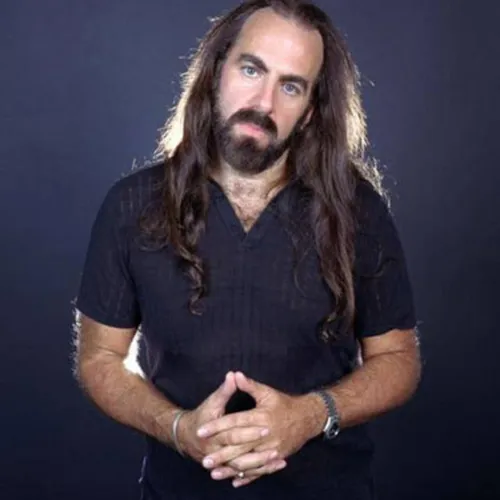
artista
Arthur Baker
2,28 mil Seguidores
No hay próximos espectáculos
Envía una solicitud a Arthur Baker para que dé un concierto en tu ciudad
Solicitar un espectáculo
Artistas similares de gira
Espectáculos anteriores
Nunca te pierdas otro concierto de Arthur Baker.
Recibe alertas sobre anuncios de giras, entradas para concierto y espectáculos cerca de ti con una cuenta gratuita de Bandsintown.
Acerca De Arthur Baker
Arthur Baker
Real name: Arthur Baker / Born: April 22 1955, Boston, MA USA
Arthur Baker was among the most visible and widely-imitated of the early hip-hop producers, masterminding breakthrough experiments with tape edits and synthetic beats before crossing over to introduce the art of remixing into the pop mainstream. He began his career as a club DJ in Boston, and landed his first production work at Emergency Records, debuting with Northend's Happy Days." After relocating to New York in 1979, Baker quickly immersed himself in the nascent hip-hop scene; there he was recruited by the Salsoul label to helm a session for Joe Bataan which yielded the rap novelty "Rap-O-Clap-O." His stay in the Big Apple largely unsuccessful, he then returned to Boston, producing a handful of singles which went nowhere, among them Glory's "Can You Guess What Groove This Is?" A move back to New York followed, at which time Baker joined the staff of Tommy Boy Records, where he teamed with co-producer Shep Pettibone to record Afrika Bambaataa's groundbreaking 1982 single "Jazzy Sensation," a remake of Gwen McCrae's "Funky Sensation."
Assuming sole production control, Baker next reunited with Bambaataa for the classic "Planet Rock," a watershed in hip-hop's early evolution -- a wholly-synthesized record inspired by Kraftwerk's Trans-Europe Express, its programmed beats left an indelible imprint on the music released in its wake. Baker's success at Tommy Boy led to the formation of his own label, Streetwise Records; after helming underground club hits for Rockers Revenge, Nairobi and Citispeak, he signed a then-unknown New Edition, issuing the teen vocal group's debut single "Candy Girl" in 1982. Baker's gradual absorption into the pop mainstream continued in 1983, when the cutting-edge British dance group New Order contacted him to produce their single "Confusion; " the record became an immediate club classic, even scraping into the American R&B charts. Remixes of the track also help pioneer the remix aesthetic throughout the rock mainstream, and soon Baker was producing material for Naked Eyes, Face to Face, Diana Ross, Jeff Beck and others.
In 1989, he also assembled artists including Al Green, ABC and Jimmy Somerville to record the all-star LP Merge, credited to Arthur Baker and the Backbeat Disciples. After a follow-up, 1991's Give in to the Rhythm, he returned to production, albeit no longer exerting the same kind of influence as in the decade prior.
Arthur Baker was among the most visible and widely-imitated of the early hip-hop producers, masterminding breakthrough experiments with tape edits and synthetic beats before crossing over to introduce the art of remixing into the pop mainstream. He began his career as a club DJ in Boston, and landed his first production work at Emergency Records, debuting with Northend's Happy Days." After relocating to New York in 1979, Baker quickly immersed himself in the nascent hip-hop scene; there he was recruited by the Salsoul label to helm a session for Joe Bataan which yielded the rap novelty "Rap-O-Clap-O." His stay in the Big Apple largely unsuccessful, he then returned to Boston, producing a handful of singles which went nowhere, among them Glory's "Can You Guess What Groove This Is?" A move back to New York followed, at which time Baker joined the staff of Tommy Boy Records, where he teamed with co-producer Shep Pettibone to record Afrika Bambaataa's groundbreaking 1982 single "Jazzy Sensation," a remake of Gwen McCrae's "Funky Sensation."
Assuming sole production control, Baker next reunited with Bambaataa for the classic "Planet Rock," a watershed in hip-hop's early evolution -- a wholly-synthesized record inspired by Kraftwerk's Trans-Europe Express, its programmed beats left an indelible imprint on the music released in its wake. Baker's success at Tommy Boy led to the formation of his own label, Streetwise Records; after helming underground club hits for Rockers Revenge, Nairobi and Citispeak, he signed a then-unknown New Edition, issuing the teen vocal group's debut single "Candy Girl" in 1982. Baker's gradual absorption into the pop mainstream continued in 1983, when the cutting-edge British dance group New Order contacted him to produce their single "Confusion; " the record became an immediate club classic, even scraping into the American R&B charts. Remixes of the track also help pioneer the remix aesthetic throughout the rock mainstream, and soon Baker was producing material for Naked Eyes, Face to Face, Diana Ross, Jeff Beck and others.
In 1989, he also assembled artists including Al Green, ABC and Jimmy Somerville to record the all-star LP Merge, credited to Arthur Baker and the Backbeat Disciples. After a follow-up, 1991's Give in to the Rhythm, he returned to production, albeit no longer exerting the same kind of influence as in the decade prior.
Mostrar más
Géneros:
Electro House, Electronic
No hay próximos espectáculos
Envía una solicitud a Arthur Baker para que dé un concierto en tu ciudad
Solicitar un espectáculo
Artistas similares de gira
Espectáculos anteriores
Acerca De Arthur Baker
Arthur Baker
Real name: Arthur Baker / Born: April 22 1955, Boston, MA USA
Arthur Baker was among the most visible and widely-imitated of the early hip-hop producers, masterminding breakthrough experiments with tape edits and synthetic beats before crossing over to introduce the art of remixing into the pop mainstream. He began his career as a club DJ in Boston, and landed his first production work at Emergency Records, debuting with Northend's Happy Days." After relocating to New York in 1979, Baker quickly immersed himself in the nascent hip-hop scene; there he was recruited by the Salsoul label to helm a session for Joe Bataan which yielded the rap novelty "Rap-O-Clap-O." His stay in the Big Apple largely unsuccessful, he then returned to Boston, producing a handful of singles which went nowhere, among them Glory's "Can You Guess What Groove This Is?" A move back to New York followed, at which time Baker joined the staff of Tommy Boy Records, where he teamed with co-producer Shep Pettibone to record Afrika Bambaataa's groundbreaking 1982 single "Jazzy Sensation," a remake of Gwen McCrae's "Funky Sensation."
Assuming sole production control, Baker next reunited with Bambaataa for the classic "Planet Rock," a watershed in hip-hop's early evolution -- a wholly-synthesized record inspired by Kraftwerk's Trans-Europe Express, its programmed beats left an indelible imprint on the music released in its wake. Baker's success at Tommy Boy led to the formation of his own label, Streetwise Records; after helming underground club hits for Rockers Revenge, Nairobi and Citispeak, he signed a then-unknown New Edition, issuing the teen vocal group's debut single "Candy Girl" in 1982. Baker's gradual absorption into the pop mainstream continued in 1983, when the cutting-edge British dance group New Order contacted him to produce their single "Confusion; " the record became an immediate club classic, even scraping into the American R&B charts. Remixes of the track also help pioneer the remix aesthetic throughout the rock mainstream, and soon Baker was producing material for Naked Eyes, Face to Face, Diana Ross, Jeff Beck and others.
In 1989, he also assembled artists including Al Green, ABC and Jimmy Somerville to record the all-star LP Merge, credited to Arthur Baker and the Backbeat Disciples. After a follow-up, 1991's Give in to the Rhythm, he returned to production, albeit no longer exerting the same kind of influence as in the decade prior.
Arthur Baker was among the most visible and widely-imitated of the early hip-hop producers, masterminding breakthrough experiments with tape edits and synthetic beats before crossing over to introduce the art of remixing into the pop mainstream. He began his career as a club DJ in Boston, and landed his first production work at Emergency Records, debuting with Northend's Happy Days." After relocating to New York in 1979, Baker quickly immersed himself in the nascent hip-hop scene; there he was recruited by the Salsoul label to helm a session for Joe Bataan which yielded the rap novelty "Rap-O-Clap-O." His stay in the Big Apple largely unsuccessful, he then returned to Boston, producing a handful of singles which went nowhere, among them Glory's "Can You Guess What Groove This Is?" A move back to New York followed, at which time Baker joined the staff of Tommy Boy Records, where he teamed with co-producer Shep Pettibone to record Afrika Bambaataa's groundbreaking 1982 single "Jazzy Sensation," a remake of Gwen McCrae's "Funky Sensation."
Assuming sole production control, Baker next reunited with Bambaataa for the classic "Planet Rock," a watershed in hip-hop's early evolution -- a wholly-synthesized record inspired by Kraftwerk's Trans-Europe Express, its programmed beats left an indelible imprint on the music released in its wake. Baker's success at Tommy Boy led to the formation of his own label, Streetwise Records; after helming underground club hits for Rockers Revenge, Nairobi and Citispeak, he signed a then-unknown New Edition, issuing the teen vocal group's debut single "Candy Girl" in 1982. Baker's gradual absorption into the pop mainstream continued in 1983, when the cutting-edge British dance group New Order contacted him to produce their single "Confusion; " the record became an immediate club classic, even scraping into the American R&B charts. Remixes of the track also help pioneer the remix aesthetic throughout the rock mainstream, and soon Baker was producing material for Naked Eyes, Face to Face, Diana Ross, Jeff Beck and others.
In 1989, he also assembled artists including Al Green, ABC and Jimmy Somerville to record the all-star LP Merge, credited to Arthur Baker and the Backbeat Disciples. After a follow-up, 1991's Give in to the Rhythm, he returned to production, albeit no longer exerting the same kind of influence as in the decade prior.
Mostrar más
Géneros:
Electro House, Electronic
Nunca te pierdas otro concierto de Arthur Baker.
Recibe alertas sobre anuncios de giras, entradas para concierto y espectáculos cerca de ti con una cuenta gratuita de Bandsintown.
Vive la experiencia total con la aplicación de Bandsintown.
