You’ve got great taste!
Log in to follow your favorite artists, save events, & more.

'%3e %3cpath d='M17.2 8.65233C17.2 3.87262 13.3508 0 8.6 0C3.84919 0 0 3.87262 0 8.65233C0 12.9785 3.12097 16.572 7.24758 17.2V11.1643H5.0629V8.65233H7.24758V6.76836C7.24758 4.60527 8.53065 3.38418 10.4726 3.38418C11.4435 3.38418 12.4145 3.55862 12.4145 3.55862V5.68682H11.3395C10.2645 5.68682 9.91774 6.3497 9.91774 7.04746V8.65233H12.3105L11.929 11.1643H9.91774V17.2C14.0444 16.572 17.2 12.9785 17.2 8.65233Z' fill='%236D6D6D'/%3e %3c/g%3e %3cdefs%3e %3cclipPath id='clip0_11991_110375'%3e %3crect width='17.2' height='17.2' fill='white'/%3e %3c/clipPath%3e %3c/defs%3e %3c/svg%3e)
'%3e %3cpath d='M13.546 0.716797H16.1835L10.4214 7.3954L17.2 16.4835H11.8924L7.73534 10.9716L2.97869 16.4835H0.339647L6.50272 9.33995L0 0.716797H5.44232L9.19996 5.75485L13.546 0.716797ZM12.6204 14.8825H14.0818L4.64822 2.23363H3.07994L12.6204 14.8825Z' fill='%236D6D6D'/%3e %3c/g%3e %3cdefs%3e %3cclipPath id='clip0_11991_110380'%3e %3crect width='17.2' height='17.2' fill='white'/%3e %3c/clipPath%3e %3c/defs%3e %3c/svg%3e)
'%3e %3cpath d='M8.6192 4.16563C6.16205 4.16563 4.20402 6.16205 4.20402 8.5808C4.20402 11.0379 6.16205 12.996 8.6192 12.996C11.0379 12.996 13.0344 11.0379 13.0344 8.5808C13.0344 6.16205 11.0379 4.16563 8.6192 4.16563ZM8.6192 11.4603C7.04509 11.4603 5.73973 10.1933 5.73973 8.5808C5.73973 7.0067 7.0067 5.73973 8.6192 5.73973C10.1933 5.73973 11.4603 7.0067 11.4603 8.5808C11.4603 10.1933 10.1933 11.4603 8.6192 11.4603ZM14.2246 4.01205C14.2246 4.58795 13.7638 5.04866 13.1879 5.04866C12.6121 5.04866 12.1513 4.58795 12.1513 4.01205C12.1513 3.43616 12.6121 2.97545 13.1879 2.97545C13.7638 2.97545 14.2246 3.43616 14.2246 4.01205ZM17.1424 5.04866C17.0656 3.66652 16.7585 2.43795 15.7603 1.43973C14.7621 0.441518 13.5335 0.134375 12.1513 0.0575893C10.7308 -0.0191964 6.4692 -0.0191964 5.04866 0.0575893C3.66652 0.134375 2.47634 0.441518 1.43973 1.43973C0.441518 2.43795 0.134375 3.66652 0.0575893 5.04866C-0.0191964 6.4692 -0.0191964 10.7308 0.0575893 12.1513C0.134375 13.5335 0.441518 14.7237 1.43973 15.7603C2.47634 16.7585 3.66652 17.0656 5.04866 17.1424C6.4692 17.2192 10.7308 17.2192 12.1513 17.1424C13.5335 17.0656 14.7621 16.7585 15.7603 15.7603C16.7585 14.7237 17.0656 13.5335 17.1424 12.1513C17.2192 10.7308 17.2192 6.4692 17.1424 5.04866ZM15.2996 13.6487C15.0308 14.4165 14.4165 14.9924 13.6871 15.2996C12.5353 15.7603 9.84777 15.6451 8.6192 15.6451C7.35223 15.6451 4.66473 15.7603 3.55134 15.2996C2.78348 14.9924 2.20759 14.4165 1.90045 13.6487C1.43973 12.5353 1.55491 9.84777 1.55491 8.5808C1.55491 7.35223 1.43973 4.66473 1.90045 3.51295C2.20759 2.78348 2.78348 2.20759 3.55134 1.90045C4.66473 1.43973 7.35223 1.55491 8.6192 1.55491C9.84777 1.55491 12.5353 1.43973 13.6871 1.90045C14.4165 2.1692 14.9924 2.78348 15.2996 3.51295C15.7603 4.66473 15.6451 7.35223 15.6451 8.5808C15.6451 9.84777 15.7603 12.5353 15.2996 13.6487Z' fill='%236D6D6D'/%3e %3c/g%3e %3cdefs%3e %3cclipPath id='clip0_11991_110387'%3e %3crect width='17.2' height='17.2' fill='white'/%3e %3c/clipPath%3e %3c/defs%3e %3c/svg%3e)


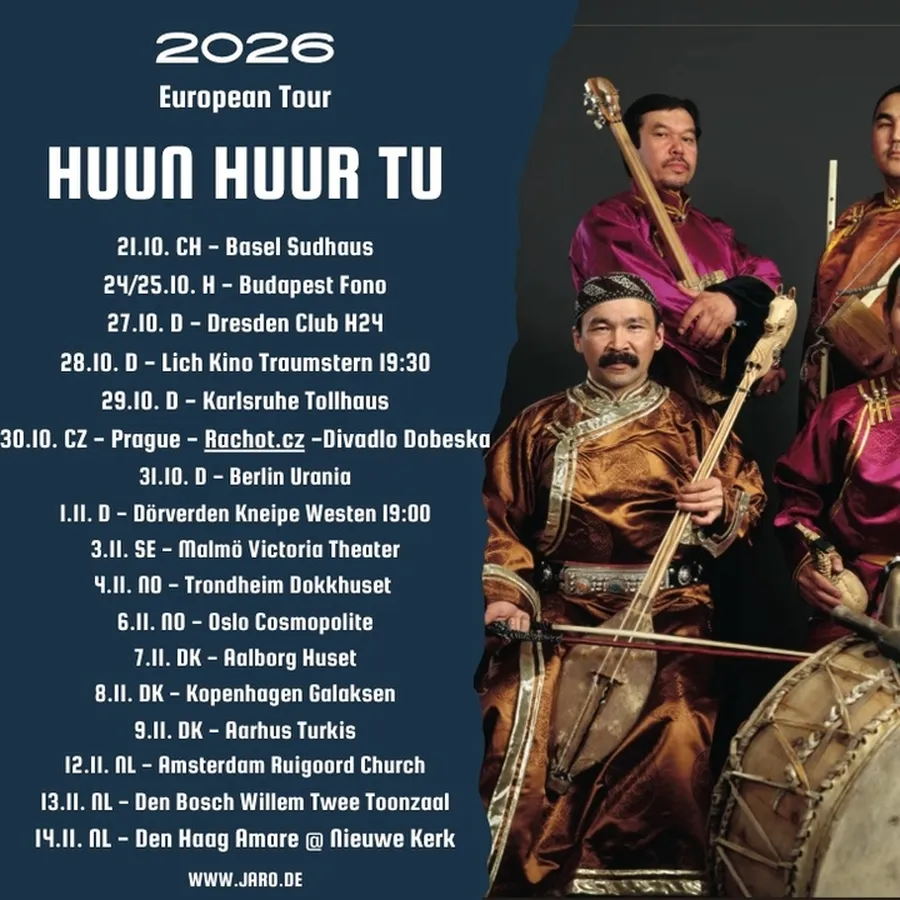
About this concert
7:00 PM GMT+1
Tuvinischer Kehlkopf- und Obertongesang ist eine der faszinierendsten Vokaltechniken der Welt, und HUUN-HUUR-TU beherrschen seine verschiedenen Spielarten meisterhaft. Unüberhörbar gibt es einen rituellen Charakter in dieser Musik, aber allen meditativen Tendenzen stellen HUUN-HUUR-TU eine stark rhythmische Ausrichtung gegenüber. Zutiefst geheimnisvoll bleibt dieser faszinierende Obertongesang, der bis zu 3 Melodien gleichzeitig erklingen lassen kann, dennoch. Traditionell wurde tuvinische Musik meist von Solisten vorgetragen, und Musiker spezialisierten sich auf ein bestimmtes Genre oder einen Stil. Diese Genres und Stile wiederum haben ihren Ursprung in bestimmten sozialen Anlässen. HUUN-HUUR-TUs eklektische Aufführungen alter Lieder und Melodien als Gruppe und begleitet von Instrumenten bewegen sich so zwischen allen Elementen tuvinischen Musiklebens. Für westliche Ohren klingen sie faszinierend fremdartig, aber gleichzeitig zeitgenössisch und modern.
Find a place to stay
Easily follow your favorite artists by syncing your music.
Get Started

Artist bio

Huun-Huur-Tu is a throat singing group from Tuva, Russian Federation situated north of Chinese Turkestan, west of the Mongolian border. The Tuvan throat singing technique allows one person to sing in a way that makes the listener hear different/multiple notes at the same time from the same singer. This is done by manipulating the harmonics to amplify different overtones within their mouth/throat/belly when they are singing, and is referred to as khoomei in its native tuva.
In 1992 Kaigal-ool Khovalyg, Alexander Bapa, his brother Sayan Bapa, and Albert Kuvezin founded the quartet Kungurtuk, as a means of concentrating on the presentation of traditional songs of their homeland. The musicians later decided to rename the ensemble Huun-Huur-Tu. After the first album 60 Horses in my Herd (1993), Kuvezin left the band to form the more rock-oriented Yat-Kha. Kuvezin was replaced by Anatoli Kuular , who had previously worked with Khovalyg and Kongar-ool Ondar as part of the Tuva Ensemble. In 1995, Alexander Bapa, who had produced the first two albums, departed the band to pursue production as a full-time career. He was replaced by Alexei Saryglar. In 2003 Kuular quit the band and was replaced by Andrey Mongush.
The name Huun-Huur-Tu (sometimes spelled without hyphens) translates literally to "Sun Propeller," a Tuvan term referring to the special kind of light you can see streaming down through the clouds at dawn or down through densely leaved trees at noon.
Their website is http://www.huunhuurtu.com
Read MoreIn 1992 Kaigal-ool Khovalyg, Alexander Bapa, his brother Sayan Bapa, and Albert Kuvezin founded the quartet Kungurtuk, as a means of concentrating on the presentation of traditional songs of their homeland. The musicians later decided to rename the ensemble Huun-Huur-Tu. After the first album 60 Horses in my Herd (1993), Kuvezin left the band to form the more rock-oriented Yat-Kha. Kuvezin was replaced by Anatoli Kuular , who had previously worked with Khovalyg and Kongar-ool Ondar as part of the Tuva Ensemble. In 1995, Alexander Bapa, who had produced the first two albums, departed the band to pursue production as a full-time career. He was replaced by Alexei Saryglar. In 2003 Kuular quit the band and was replaced by Andrey Mongush.
The name Huun-Huur-Tu (sometimes spelled without hyphens) translates literally to "Sun Propeller," a Tuvan term referring to the special kind of light you can see streaming down through the clouds at dawn or down through densely leaved trees at noon.
Their website is http://www.huunhuurtu.com
Genres:Folk, Ethno, Other
Band Members: Sayan Bapa, Khovalyg Kaigal-Ool, Radik Tyulyush, Alexei Saryglar
Share Event

Live Photos of Huun-Huur-Tu


What fans are saying
As always, great show!
Oct 16, 2025·Berlin, Germany

Cosmic