You’ve got great taste!
Log in to follow your favorite artists, save events, & more.

'%3e %3cpath d='M17.2 8.65233C17.2 3.87262 13.3508 0 8.6 0C3.84919 0 0 3.87262 0 8.65233C0 12.9785 3.12097 16.572 7.24758 17.2V11.1643H5.0629V8.65233H7.24758V6.76836C7.24758 4.60527 8.53065 3.38418 10.4726 3.38418C11.4435 3.38418 12.4145 3.55862 12.4145 3.55862V5.68682H11.3395C10.2645 5.68682 9.91774 6.3497 9.91774 7.04746V8.65233H12.3105L11.929 11.1643H9.91774V17.2C14.0444 16.572 17.2 12.9785 17.2 8.65233Z' fill='%236D6D6D'/%3e %3c/g%3e %3cdefs%3e %3cclipPath id='clip0_11991_110375'%3e %3crect width='17.2' height='17.2' fill='white'/%3e %3c/clipPath%3e %3c/defs%3e %3c/svg%3e)
'%3e %3cpath d='M13.546 0.716797H16.1835L10.4214 7.3954L17.2 16.4835H11.8924L7.73534 10.9716L2.97869 16.4835H0.339647L6.50272 9.33995L0 0.716797H5.44232L9.19996 5.75485L13.546 0.716797ZM12.6204 14.8825H14.0818L4.64822 2.23363H3.07994L12.6204 14.8825Z' fill='%236D6D6D'/%3e %3c/g%3e %3cdefs%3e %3cclipPath id='clip0_11991_110380'%3e %3crect width='17.2' height='17.2' fill='white'/%3e %3c/clipPath%3e %3c/defs%3e %3c/svg%3e)
'%3e %3cpath d='M8.6192 4.16563C6.16205 4.16563 4.20402 6.16205 4.20402 8.5808C4.20402 11.0379 6.16205 12.996 8.6192 12.996C11.0379 12.996 13.0344 11.0379 13.0344 8.5808C13.0344 6.16205 11.0379 4.16563 8.6192 4.16563ZM8.6192 11.4603C7.04509 11.4603 5.73973 10.1933 5.73973 8.5808C5.73973 7.0067 7.0067 5.73973 8.6192 5.73973C10.1933 5.73973 11.4603 7.0067 11.4603 8.5808C11.4603 10.1933 10.1933 11.4603 8.6192 11.4603ZM14.2246 4.01205C14.2246 4.58795 13.7638 5.04866 13.1879 5.04866C12.6121 5.04866 12.1513 4.58795 12.1513 4.01205C12.1513 3.43616 12.6121 2.97545 13.1879 2.97545C13.7638 2.97545 14.2246 3.43616 14.2246 4.01205ZM17.1424 5.04866C17.0656 3.66652 16.7585 2.43795 15.7603 1.43973C14.7621 0.441518 13.5335 0.134375 12.1513 0.0575893C10.7308 -0.0191964 6.4692 -0.0191964 5.04866 0.0575893C3.66652 0.134375 2.47634 0.441518 1.43973 1.43973C0.441518 2.43795 0.134375 3.66652 0.0575893 5.04866C-0.0191964 6.4692 -0.0191964 10.7308 0.0575893 12.1513C0.134375 13.5335 0.441518 14.7237 1.43973 15.7603C2.47634 16.7585 3.66652 17.0656 5.04866 17.1424C6.4692 17.2192 10.7308 17.2192 12.1513 17.1424C13.5335 17.0656 14.7621 16.7585 15.7603 15.7603C16.7585 14.7237 17.0656 13.5335 17.1424 12.1513C17.2192 10.7308 17.2192 6.4692 17.1424 5.04866ZM15.2996 13.6487C15.0308 14.4165 14.4165 14.9924 13.6871 15.2996C12.5353 15.7603 9.84777 15.6451 8.6192 15.6451C7.35223 15.6451 4.66473 15.7603 3.55134 15.2996C2.78348 14.9924 2.20759 14.4165 1.90045 13.6487C1.43973 12.5353 1.55491 9.84777 1.55491 8.5808C1.55491 7.35223 1.43973 4.66473 1.90045 3.51295C2.20759 2.78348 2.78348 2.20759 3.55134 1.90045C4.66473 1.43973 7.35223 1.55491 8.6192 1.55491C9.84777 1.55491 12.5353 1.43973 13.6871 1.90045C14.4165 2.1692 14.9924 2.78348 15.2996 3.51295C15.7603 4.66473 15.6451 7.35223 15.6451 8.5808C15.6451 9.84777 15.7603 12.5353 15.2996 13.6487Z' fill='%236D6D6D'/%3e %3c/g%3e %3cdefs%3e %3cclipPath id='clip0_11991_110387'%3e %3crect width='17.2' height='17.2' fill='white'/%3e %3c/clipPath%3e %3c/defs%3e %3c/svg%3e)


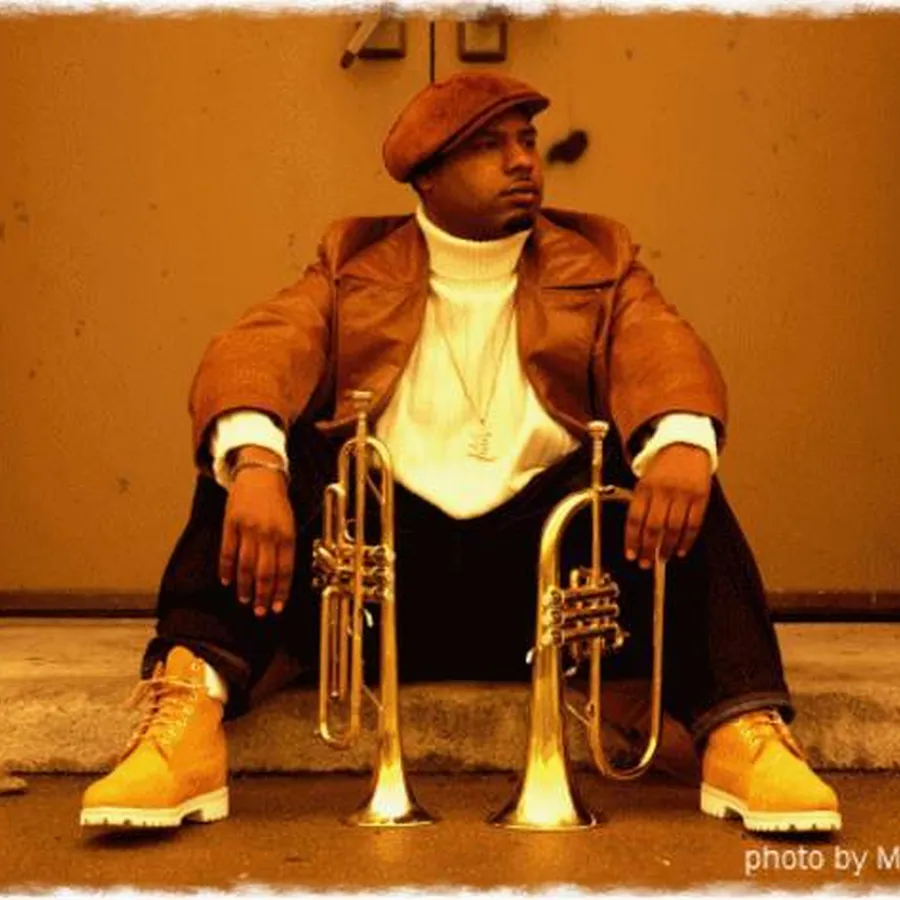
The Journey of Jazz Cruise 2027 Lineup
Bookmark your favorites to build your schedule and get reminders
Show More
About The Journey of Jazz Cruise 2027
January 24 – 31, 2027
Port Tampa Bay Cruise Terminal - 2
651 Channelside Dr, Tampa, FLGet directions
journeyofjazz.com
Journey of Jazz ’27, our premier program celebrating the genre’s birthplace, seamlessly combines our renowned “at Sea” music presentations with privately curated and prod...
read moreFollow Festival
Artist bio
Russell Gunn & Blackhawk
Afrikan-Amerikan Book of the Dead:
Trumpeter Russell Gunn’s provocative and powerful latest offering reflects a revolution of the mind as it pertains to Black Americans, the digestion of sanitized history and, most importantly, how a people move forward with greater knowledge of self, truth, pride, and strength to reclaim a ‘vanglorious’ new day under the sun.
Entitled Afrikan-Amerikan Book of the Dead, (releasing through Vanglorious Arts in Fall 2026), the 7-song album consists of 6 original Gunn compositions and one Duke Ellington classic, that continues his exploration of creating a ground zero soundtrack for real Black enrichment, ethnomusicology and excellence.
One clear motive is to make thought-provoking music that is bold yet non-reactionary. Gunn elucidates, “My music does not play defense. My music plays offense - letting people know we understand who we were, who we are, all the things that we do, illuminating the institutional lies about who we are, and identifying those who set the policies for the lies. The way I write, and think may appear, to some, that I’m coming from an antagonistic point of view. Like, ‘they did this to us / oh, woe is us. However, my music is not a ‘response’ to the past. I’m coming from a space of pro understanding about what my ancestors created and achieved, and how my people can proceed in the greatness of all that.”
Afrikan-Amerikan Book of the Dead also introduces Gunn’s fiery new sextet, Blackhawk: hand-picked players primarily from East St. Louis (where Gunn was raised) and Atlanta (where he now resides). “I call this band Blackhawk because my favorite record – the one from which I learned the most about how to play the music from a non-academic, truly rooted sense – is Miles Davis’ In Person Friday and Saturday Nights at The Blackhawk” (Columbia – 1961).
“Going forward, I intend that everything we do approach the level of how that powerful live Miles record inspired me. There has been endless debate but, to me, the connection between that ensemble was the best Miles Davis band - hands down. It never felt as good as Jimmy Cobb on drums, Paul Chambers on bass and Wynton Kelly on piano…the closest thing to Nirvana.”
“I picked each musician of Blackhawk for what I knew they would bring to the record. I’ve known saxophonist Kendrick Smith since he was a little kid. He’s grown into one of the greatest musicians out here. The person I’ve known the longest is trombonist Andre Hayward (Mingus Dynasty Band, Gerald Wilson, Roy Hargrove). I believe he is the best trombonist walking the earth today.”
Rounding out the trio are pianist Kevin Bales, bassist Kevin “Raw Dog” Smith and drummer Jeremy “Bean” Clemons – all making head-snapping contributions to the music as a unit and as soloists.
Additional musicians include turntablist Sean Falyon, Hammond B3 organist Larry Wilson, percussionist Ali Barr, baritone saxophonist Jamel Mitchell, vocalist Ken “K Solo 0007” Wells and the Bond Avenue String Quartet.
As in matters of Earthly transition, Afrikan-Amerikan Book of the Dead opens with the solemn, organ-led, thesis-stating message, “Pan Afrikan Invocation.”
Exploding with much existential majesty is “The Rule of Two,” mirroring a parallel from film visionary George Lucas’ “Star Wars” mythology regarding the dichotomy of there always being one entity in possession of great power and another entity in the wings with great desire to take it over. “In modern society,” Gunn observes, “there’s so much craziness going on, yet no one knows precisely who is pulling the strings.” Chaos and tyranny fuel the feel of this music to where even when there appears to be peace, something else is always poised…to strike!”
“Cahokia Pyramids” musically tells the story of a historical cultural site in East St. Louis that establishes that dark-skinned people fully inhabited the land long before the pilgrims. The piece has a soaring melody, a deep breakdown of the rhythm section then intense trades between the frontline trumpet, trombone and sax, depicting yet another great place of peace…destroyed. “The thing about that site is it’s not the only one.,” Gunn states. “They exist throughout the Midwest. They’ve been called ‘mounds’ to throw you off the fact there were intelligent people who existed there and built great cities. I’ve been to the great pyramids in Egypt. Though Cahokia doesn’t rival those, it shows that that thing happened here in America, too. And it wasn’t just St. Louis. It was up and down the Mississippi, in Memphis, Mexico, the Yucatan Peninsula, and Peru. This gets into the ending of the album, too, “Voyages of the Pyramid Builders” - in India, Bali, Thailand, and the one they tried to hide in China by planting trees to camouflage it. It’s about facts. Dark skinned people did this a long time ago. It’s not speculation. We know what the people who built these things looked like because they depicted themselves in the artwork.”
Gunn continues, “I wanted the listener to imagine a peaceful time, people living their lives after these places were built. Then here come some usurpers disturbing the peace. That’s when the music switches up. It eventually returns to the serenity of the beginning, and you come to the understanding of what it was, then you can have that peace again.”
“East St. Louis Toodle-Oo” is a shapeshifting composition created by Duke Ellington with trumpeter Bubber Miley. Gunn and company take the tune through some very hip rhythmic and sonic changes. “Band leaders don’t call this tune much,” Gunn shares. “The only two covers I recall are by (saxophonist) Greg Osby and (jazz rockers) Steely Dan. This song is from 1926. I was trying to imagine what Duke was doing in East St. Louis at that time - then to add the term ‘toodle-oo’ on it like, ‘I’m never coming back!?’ I wanted to do my own modern take on that tune about my hometown.”
From a craft standpoint, Gunn academically adds, “In music the important chords are the 1 and the 5. The 1 is the tonic which is home. The 5 can take on many variations but, basically, it’s the tension before the release that leads you back to the 1. The way Duke used the 5 was with a slight alteration which distinguished him. I used that alteration not only on this song but throughout the album.”
“Folkz” stems back to Gunn’s third album as a leader, Ethnomusicology, Volume 1 (Atlantic – 1999). “When I was making records back then,” Gunn reflects, “what I was doing was completely new. I’ve had years of trial and error to get it to how it sounds now. What set this one off was how some Africans have this attitude about African Americans…like they think we were the ones that left their ass and never came back! Nobody expresses that vibe better than our late, great Black comedian, Paul Mooney.” Gunn uses a lift from a standup observation made by Mooney to launch into a bravura piece overflowing with attitude over a monstrous ostinato.
Afrikan-Amerikan Book of the Dead ends with a full ensemble “Pan-Afrikan Benediction,” also featuring the reverent vocals of Ken Wells.
*****
Born in Chicago in 1971, Russell Gunn’s initial musical fascination was with Hip Hop. His family moved to East St. Louis in 1980, and Gunn took up the trumpet at age 10. By 16, his primary interest shifted to Jazz yet retained the spirit and energy of Rap. A swift and ardent study, Gunn made great strides as he made moves from a full scholarship at Mississippi’s Jackson State University. Following a move to St. Louis, he began freelancing, gaining the attention of saxophonist Oliver Lake who invited him to play with him at the Brooklyn Museum. Shortly after, a fateful jam session led to Gunn joining Wynton Marsalis for his seminal work, Blood On The Fields, with the Lincoln Center Jazz Orchestra. Subsequently, Russell joined Wynton’s brother, saxophonist Branford Marsalis, in the Jazz/Hip Hop collective Buckshot LeFonque. Since releasing his debut as a leader, Young Gunn (Muse - 1994), Gunn has been a prolific presence in Black music, from performances with Soul men D’Angelo and Maxwell to multi-hyphenates Marcus Miller, Jason Miles, Khari Cabral, Gunn’s solo albums and his own The Royal Krunk Jazz Orkestra.
2026 also finds Gunn traveling through Europe with bassist Marcus Miller’s all-star We Want Miles! band: Russell Gunn on trumpet, Bill Evans on sax, Mike Stern on guitar, Miller on bass, Mino Cinelu on percussion and Anwar Marshall on drums – celebrate the centennial of Miles Davis’ birth. Gunn is holding down the chair of Davis himself – one of a select handful of trumpeters that inspired him, including Booker Little, Lee Morgan and Freddie Hubbard.
Among Gunn’s creative ventures is the launch of his company Vanglorious Arts,
A space through which he intends to share many future projects, music and otherwise. The name “vanglorious” was invented by Professor X, leader of the Pro-Black New York Hip Hop collective, X Clan. Gunn explains, “Sometimes there’s no word to describe the overall magic and brilliance of Black men and women. The artistic, scientific and survival brilliance – to survive then create something out of nothing. X created that word vanglorious to accurately describe whatever it is that makes us so powerful.”
Summing up the intention behind Russell Gunn & Blackhawk’s Afrikan-Amerikan Book of the Dead, Gunn states, “The concept of the album is a takeoff on The Egyptian Book of The Dead: The Book of Going Forward By Day, which is a spirit guide that – once you are dead - teaches you how to be reincarnated into something better in the afterlife. My opus is about how to be happy in this life.”
(July 2026)
Read MoreAfrikan-Amerikan Book of the Dead:
Trumpeter Russell Gunn’s provocative and powerful latest offering reflects a revolution of the mind as it pertains to Black Americans, the digestion of sanitized history and, most importantly, how a people move forward with greater knowledge of self, truth, pride, and strength to reclaim a ‘vanglorious’ new day under the sun.
Entitled Afrikan-Amerikan Book of the Dead, (releasing through Vanglorious Arts in Fall 2026), the 7-song album consists of 6 original Gunn compositions and one Duke Ellington classic, that continues his exploration of creating a ground zero soundtrack for real Black enrichment, ethnomusicology and excellence.
One clear motive is to make thought-provoking music that is bold yet non-reactionary. Gunn elucidates, “My music does not play defense. My music plays offense - letting people know we understand who we were, who we are, all the things that we do, illuminating the institutional lies about who we are, and identifying those who set the policies for the lies. The way I write, and think may appear, to some, that I’m coming from an antagonistic point of view. Like, ‘they did this to us / oh, woe is us. However, my music is not a ‘response’ to the past. I’m coming from a space of pro understanding about what my ancestors created and achieved, and how my people can proceed in the greatness of all that.”
Afrikan-Amerikan Book of the Dead also introduces Gunn’s fiery new sextet, Blackhawk: hand-picked players primarily from East St. Louis (where Gunn was raised) and Atlanta (where he now resides). “I call this band Blackhawk because my favorite record – the one from which I learned the most about how to play the music from a non-academic, truly rooted sense – is Miles Davis’ In Person Friday and Saturday Nights at The Blackhawk” (Columbia – 1961).
“Going forward, I intend that everything we do approach the level of how that powerful live Miles record inspired me. There has been endless debate but, to me, the connection between that ensemble was the best Miles Davis band - hands down. It never felt as good as Jimmy Cobb on drums, Paul Chambers on bass and Wynton Kelly on piano…the closest thing to Nirvana.”
“I picked each musician of Blackhawk for what I knew they would bring to the record. I’ve known saxophonist Kendrick Smith since he was a little kid. He’s grown into one of the greatest musicians out here. The person I’ve known the longest is trombonist Andre Hayward (Mingus Dynasty Band, Gerald Wilson, Roy Hargrove). I believe he is the best trombonist walking the earth today.”
Rounding out the trio are pianist Kevin Bales, bassist Kevin “Raw Dog” Smith and drummer Jeremy “Bean” Clemons – all making head-snapping contributions to the music as a unit and as soloists.
Additional musicians include turntablist Sean Falyon, Hammond B3 organist Larry Wilson, percussionist Ali Barr, baritone saxophonist Jamel Mitchell, vocalist Ken “K Solo 0007” Wells and the Bond Avenue String Quartet.
As in matters of Earthly transition, Afrikan-Amerikan Book of the Dead opens with the solemn, organ-led, thesis-stating message, “Pan Afrikan Invocation.”
Exploding with much existential majesty is “The Rule of Two,” mirroring a parallel from film visionary George Lucas’ “Star Wars” mythology regarding the dichotomy of there always being one entity in possession of great power and another entity in the wings with great desire to take it over. “In modern society,” Gunn observes, “there’s so much craziness going on, yet no one knows precisely who is pulling the strings.” Chaos and tyranny fuel the feel of this music to where even when there appears to be peace, something else is always poised…to strike!”
“Cahokia Pyramids” musically tells the story of a historical cultural site in East St. Louis that establishes that dark-skinned people fully inhabited the land long before the pilgrims. The piece has a soaring melody, a deep breakdown of the rhythm section then intense trades between the frontline trumpet, trombone and sax, depicting yet another great place of peace…destroyed. “The thing about that site is it’s not the only one.,” Gunn states. “They exist throughout the Midwest. They’ve been called ‘mounds’ to throw you off the fact there were intelligent people who existed there and built great cities. I’ve been to the great pyramids in Egypt. Though Cahokia doesn’t rival those, it shows that that thing happened here in America, too. And it wasn’t just St. Louis. It was up and down the Mississippi, in Memphis, Mexico, the Yucatan Peninsula, and Peru. This gets into the ending of the album, too, “Voyages of the Pyramid Builders” - in India, Bali, Thailand, and the one they tried to hide in China by planting trees to camouflage it. It’s about facts. Dark skinned people did this a long time ago. It’s not speculation. We know what the people who built these things looked like because they depicted themselves in the artwork.”
Gunn continues, “I wanted the listener to imagine a peaceful time, people living their lives after these places were built. Then here come some usurpers disturbing the peace. That’s when the music switches up. It eventually returns to the serenity of the beginning, and you come to the understanding of what it was, then you can have that peace again.”
“East St. Louis Toodle-Oo” is a shapeshifting composition created by Duke Ellington with trumpeter Bubber Miley. Gunn and company take the tune through some very hip rhythmic and sonic changes. “Band leaders don’t call this tune much,” Gunn shares. “The only two covers I recall are by (saxophonist) Greg Osby and (jazz rockers) Steely Dan. This song is from 1926. I was trying to imagine what Duke was doing in East St. Louis at that time - then to add the term ‘toodle-oo’ on it like, ‘I’m never coming back!?’ I wanted to do my own modern take on that tune about my hometown.”
From a craft standpoint, Gunn academically adds, “In music the important chords are the 1 and the 5. The 1 is the tonic which is home. The 5 can take on many variations but, basically, it’s the tension before the release that leads you back to the 1. The way Duke used the 5 was with a slight alteration which distinguished him. I used that alteration not only on this song but throughout the album.”
“Folkz” stems back to Gunn’s third album as a leader, Ethnomusicology, Volume 1 (Atlantic – 1999). “When I was making records back then,” Gunn reflects, “what I was doing was completely new. I’ve had years of trial and error to get it to how it sounds now. What set this one off was how some Africans have this attitude about African Americans…like they think we were the ones that left their ass and never came back! Nobody expresses that vibe better than our late, great Black comedian, Paul Mooney.” Gunn uses a lift from a standup observation made by Mooney to launch into a bravura piece overflowing with attitude over a monstrous ostinato.
Afrikan-Amerikan Book of the Dead ends with a full ensemble “Pan-Afrikan Benediction,” also featuring the reverent vocals of Ken Wells.
*****
Born in Chicago in 1971, Russell Gunn’s initial musical fascination was with Hip Hop. His family moved to East St. Louis in 1980, and Gunn took up the trumpet at age 10. By 16, his primary interest shifted to Jazz yet retained the spirit and energy of Rap. A swift and ardent study, Gunn made great strides as he made moves from a full scholarship at Mississippi’s Jackson State University. Following a move to St. Louis, he began freelancing, gaining the attention of saxophonist Oliver Lake who invited him to play with him at the Brooklyn Museum. Shortly after, a fateful jam session led to Gunn joining Wynton Marsalis for his seminal work, Blood On The Fields, with the Lincoln Center Jazz Orchestra. Subsequently, Russell joined Wynton’s brother, saxophonist Branford Marsalis, in the Jazz/Hip Hop collective Buckshot LeFonque. Since releasing his debut as a leader, Young Gunn (Muse - 1994), Gunn has been a prolific presence in Black music, from performances with Soul men D’Angelo and Maxwell to multi-hyphenates Marcus Miller, Jason Miles, Khari Cabral, Gunn’s solo albums and his own The Royal Krunk Jazz Orkestra.
2026 also finds Gunn traveling through Europe with bassist Marcus Miller’s all-star We Want Miles! band: Russell Gunn on trumpet, Bill Evans on sax, Mike Stern on guitar, Miller on bass, Mino Cinelu on percussion and Anwar Marshall on drums – celebrate the centennial of Miles Davis’ birth. Gunn is holding down the chair of Davis himself – one of a select handful of trumpeters that inspired him, including Booker Little, Lee Morgan and Freddie Hubbard.
Among Gunn’s creative ventures is the launch of his company Vanglorious Arts,
A space through which he intends to share many future projects, music and otherwise. The name “vanglorious” was invented by Professor X, leader of the Pro-Black New York Hip Hop collective, X Clan. Gunn explains, “Sometimes there’s no word to describe the overall magic and brilliance of Black men and women. The artistic, scientific and survival brilliance – to survive then create something out of nothing. X created that word vanglorious to accurately describe whatever it is that makes us so powerful.”
Summing up the intention behind Russell Gunn & Blackhawk’s Afrikan-Amerikan Book of the Dead, Gunn states, “The concept of the album is a takeoff on The Egyptian Book of The Dead: The Book of Going Forward By Day, which is a spirit guide that – once you are dead - teaches you how to be reincarnated into something better in the afterlife. My opus is about how to be happy in this life.”
(July 2026)
Genres:Jazz
Hometown: Atlanta, Georgia