You’ve got great taste!
Log in to follow your favorite artists, save events, & more.

'%3e %3cpath d='M17.2 8.65233C17.2 3.87262 13.3508 0 8.6 0C3.84919 0 0 3.87262 0 8.65233C0 12.9785 3.12097 16.572 7.24758 17.2V11.1643H5.0629V8.65233H7.24758V6.76836C7.24758 4.60527 8.53065 3.38418 10.4726 3.38418C11.4435 3.38418 12.4145 3.55862 12.4145 3.55862V5.68682H11.3395C10.2645 5.68682 9.91774 6.3497 9.91774 7.04746V8.65233H12.3105L11.929 11.1643H9.91774V17.2C14.0444 16.572 17.2 12.9785 17.2 8.65233Z' fill='%236D6D6D'/%3e %3c/g%3e %3cdefs%3e %3cclipPath id='clip0_11991_110375'%3e %3crect width='17.2' height='17.2' fill='white'/%3e %3c/clipPath%3e %3c/defs%3e %3c/svg%3e)
'%3e %3cpath d='M13.546 0.716797H16.1835L10.4214 7.3954L17.2 16.4835H11.8924L7.73534 10.9716L2.97869 16.4835H0.339647L6.50272 9.33995L0 0.716797H5.44232L9.19996 5.75485L13.546 0.716797ZM12.6204 14.8825H14.0818L4.64822 2.23363H3.07994L12.6204 14.8825Z' fill='%236D6D6D'/%3e %3c/g%3e %3cdefs%3e %3cclipPath id='clip0_11991_110380'%3e %3crect width='17.2' height='17.2' fill='white'/%3e %3c/clipPath%3e %3c/defs%3e %3c/svg%3e)
'%3e %3cpath d='M8.6192 4.16563C6.16205 4.16563 4.20402 6.16205 4.20402 8.5808C4.20402 11.0379 6.16205 12.996 8.6192 12.996C11.0379 12.996 13.0344 11.0379 13.0344 8.5808C13.0344 6.16205 11.0379 4.16563 8.6192 4.16563ZM8.6192 11.4603C7.04509 11.4603 5.73973 10.1933 5.73973 8.5808C5.73973 7.0067 7.0067 5.73973 8.6192 5.73973C10.1933 5.73973 11.4603 7.0067 11.4603 8.5808C11.4603 10.1933 10.1933 11.4603 8.6192 11.4603ZM14.2246 4.01205C14.2246 4.58795 13.7638 5.04866 13.1879 5.04866C12.6121 5.04866 12.1513 4.58795 12.1513 4.01205C12.1513 3.43616 12.6121 2.97545 13.1879 2.97545C13.7638 2.97545 14.2246 3.43616 14.2246 4.01205ZM17.1424 5.04866C17.0656 3.66652 16.7585 2.43795 15.7603 1.43973C14.7621 0.441518 13.5335 0.134375 12.1513 0.0575893C10.7308 -0.0191964 6.4692 -0.0191964 5.04866 0.0575893C3.66652 0.134375 2.47634 0.441518 1.43973 1.43973C0.441518 2.43795 0.134375 3.66652 0.0575893 5.04866C-0.0191964 6.4692 -0.0191964 10.7308 0.0575893 12.1513C0.134375 13.5335 0.441518 14.7237 1.43973 15.7603C2.47634 16.7585 3.66652 17.0656 5.04866 17.1424C6.4692 17.2192 10.7308 17.2192 12.1513 17.1424C13.5335 17.0656 14.7621 16.7585 15.7603 15.7603C16.7585 14.7237 17.0656 13.5335 17.1424 12.1513C17.2192 10.7308 17.2192 6.4692 17.1424 5.04866ZM15.2996 13.6487C15.0308 14.4165 14.4165 14.9924 13.6871 15.2996C12.5353 15.7603 9.84777 15.6451 8.6192 15.6451C7.35223 15.6451 4.66473 15.7603 3.55134 15.2996C2.78348 14.9924 2.20759 14.4165 1.90045 13.6487C1.43973 12.5353 1.55491 9.84777 1.55491 8.5808C1.55491 7.35223 1.43973 4.66473 1.90045 3.51295C2.20759 2.78348 2.78348 2.20759 3.55134 1.90045C4.66473 1.43973 7.35223 1.55491 8.6192 1.55491C9.84777 1.55491 12.5353 1.43973 13.6871 1.90045C14.4165 2.1692 14.9924 2.78348 15.2996 3.51295C15.7603 4.66473 15.6451 7.35223 15.6451 8.5808C15.6451 9.84777 15.7603 12.5353 15.2996 13.6487Z' fill='%236D6D6D'/%3e %3c/g%3e %3cdefs%3e %3cclipPath id='clip0_11991_110387'%3e %3crect width='17.2' height='17.2' fill='white'/%3e %3c/clipPath%3e %3c/defs%3e %3c/svg%3e)


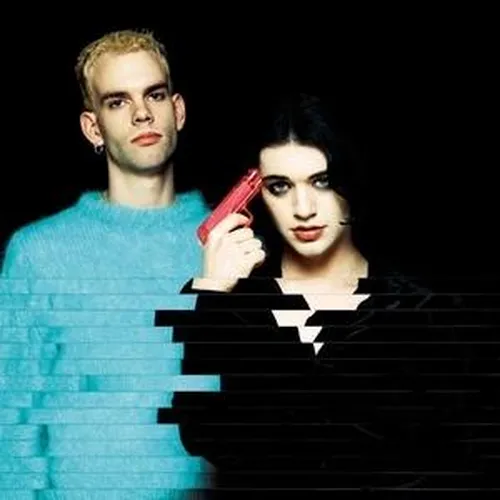
artist
Placebo
On TourVerified
963K Followers•41 Upcoming Shows
No upcoming shows in your city
Send a request to Placebo to play in your city
Request a show
All concerts & live streams
Placebo merch

PLACEBO
$34.99
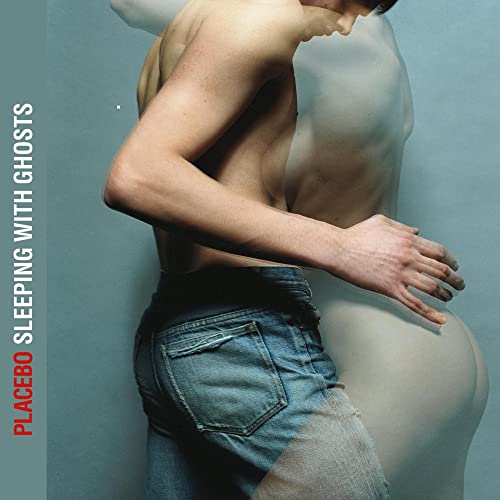
SLEEPING WITH GHOSTS
$19.99

WITHOUT YOU I'M NOTHING
$22.86

BLACK MARKET MUSIC
$19.99
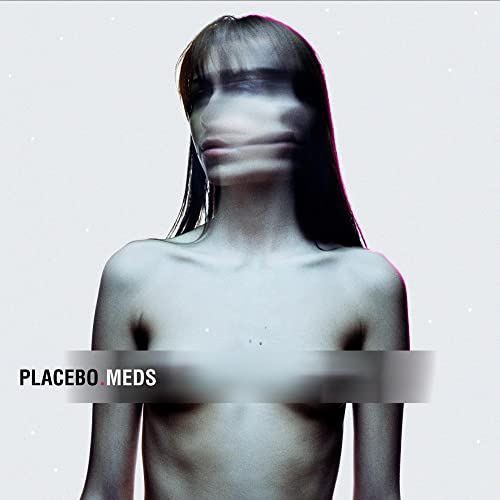
MEDS
$19.98
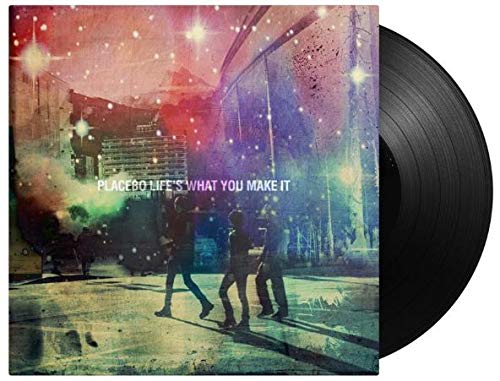
Life's What You Make It (Limited Editon Black Vinyl)
$69.95
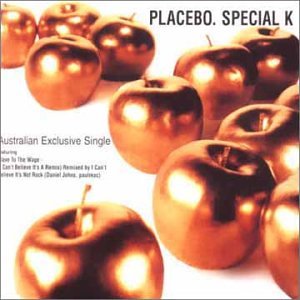
Special K / Slave Wage / Johnny
$14.32
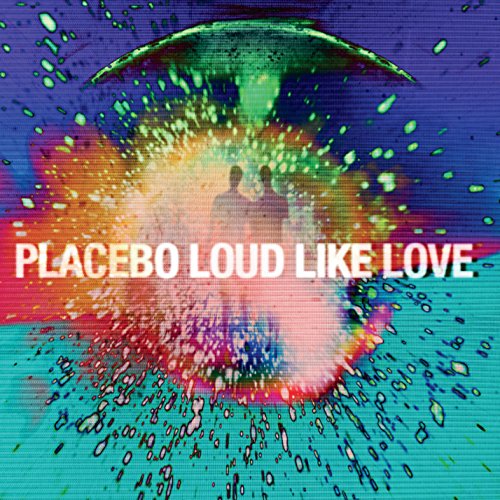
Loud Like Love
$44.95
 View more on Amazon
Placebo's tour
Fans Also Follow
Never miss another Placebo concert.
Get alerts about tour announcements, concert tickets, and shows near you with a free Bandsintown account.
About Placebo
Placebo
PLACEBO RE:CREATED – A BIOGRAPHY
“I had a dysfunctional relationship with this record for a long time,” Brian Molko says of Placebo's self-titled debut album, whose thirtieth anniversary the band are celebrating with a rebooted and supercharged version – labelled as Placebo Re:Created - which the singer-guitarist and his co-founder and bassist Stefan Olsdal both refer to as “a Director's Cut”.
Placebo, and 'Placebo', arrived in 1996. It was a year of lad mags and football fever, and the landscape around them couldn't have been less auspicious for a band whose core members were a bisexual man and a gay man, bearing a clutch of songs about twisted relationships, narcotic adventures, psychological trauma, divergent sexuality and gender nonconformism. American Grunge was croaking its dying breaths and Britpop was at its triumphalist peak, but Placebo belonged in neither camp: not the chest-beating histrionics of one, nor the beer-swilling, bandy-legged bonhomie of the other. They were, literally, coming from somewhere else. Though formed in London, they were not of London. Molko, pixieish and outrageously androgynous, was Belgian-born, of American, French, Scottish and Italian stock, and had lived in, among other places, Liberia and Lebanon. Olsdal, tall, Swedish and handsome, happened to have attended the International School of Luxembourg of which Brian was an alumnus, though the duo didn't know each other until a chance meeting in the English capital, where the former was studying at Goldsmiths College and the latter at the Musicians' Institute.
Two persons of such multi-lingual and multi-national heritage were never going to be confined by the parochial concerns of any localised music scene. Their eyes were, from the very beginning, on a bigger prize. And it's a prize which, eight high-charting albums, 14 UK Top 40 singles, 14 million record sales worldwide and countless concert tickets later, they continue to enjoy: meaningful career longevity, with devoted fans on every inhabited continent.
Back in 1996, bonding over drinks in a pub in Soho, Brian Molko and Stefan Olsdal plotted the band which may or may not have begun life as Ashtray Heart (after a Captain Beefheart song) but quickly became Placebo. But where, amid the hostile environs of 1996, were such a band possibly going to fit in?
“Nowhere,” says Brian firmly, and that was Placebo's raison d'etre. “Fitting in wasn't really something that we thought about. We were busy trying to find our own identity. We had very embryonic ideas about how we wanted to present ourselves, which was in a provocative way. We knew that we stood out like a sore thumb, and we thought like 'OK this is going to be in our favour'. Or nobody's gonna care, so let's just do it anyway. We had the freedom to be as provocative as we liked.”
“When me and Brian hooked up,” Stefan agrees, “we connected over the fact that we didn't feel like we fit in, either of us. We found we had a lot in common, but we didn't have a lot in common with what was going on around us. So I guess we were on our own, with our own voice, and said, 'Well, this is us, fuck everyone else' and stayed true to that.”
This defiant individualism wasn't a calculated tactic, says Brian. “It was more of a reflection of our personalities, and us trying to find our identity, as a band and as people.” But it paid off. Placebo weren't the only band of the Nineties who chimed with outsiders - not quite - but such bands were vanishingly rare and precious. With the help of a determinedly discordant sound - thrillingly serrated, dark alternative rock - Placebo found their tribe: “the square pegs in the round holes”, as Stefan puts it. And their tribe found them, and, via the band, each other. “Back then,” the bassist says, “it was very hard to connect with your people. You were trying to find the people that you had an affinity with. Because now, with technology, you can more easily reach out and find people with the same interests, the same musical taste and the same outlook on everything as you. But back then it was at gigs, pretty much only through music.”
Placebo – and 'Placebo' - quickly became a focal point for those 'square pegs' of which Stefan speaks. “We were just being ourselves, and I guess that people found some kind of connection to whatever we were representing. We had that belief in ourselves that you have when you're 20 years old and you feel infallible, and that gave us energy. We felt like it was better to be hated and loved than just fall somewhere in between.” And their first Top 5 hit, 'Nancy Boy', became an anthem for an entire ethos: overtly genderqueer, gleefully hedonistic, shamelessly sexual. “Does his make-up in his room / Douses himself with cheap perfume / Eyeholes in a paper bag / Greatest lay I ever had...”
There's a bittersweet irony, however, to the fact that two people who were unsatisfied by that much-loved debut album were Brian Molko and Stefan Olsdal themselves. Since almost the moment 'Placebo' hit the shops, Brian felt it wasn't quite right, a feeling which only grew in the years which followed. “I had built up this image in my head that it was an amateurish record that sounded kind of budget, sounded a bit like demos. But this was just this unrealistic idea that I built up in my head, based upon my emotions. It's probably my feelings of inadequacy, me looking back at it and just thinking that I was extremely green, and that I'd grown as a songwriter since then. I always think that I can do better, once I've done something. Which is a positive thing, because it means you continuously strive to do so. But this dysfunctional, unrealistic relationship with it has pretty much been there since the record was released.”
Part of the problem, Stefan recalls, was the rapid turnaround. “This is not throw shade on anyone, but everything was happening so fast back then, so it was literally 'OK, let's go in and record this album, in a few weeks in Dublin, and in the middle of it fly to South By Southwest in Texas, and then go on tour straight after.' And we had support slots with David Bowie just a few weeks before the recording. That's just inexperience, as well. Like, 'OK, let's just do, they tell me it won't take that long'. It's just the way things were.”
Bowie, incidentally, was an early cheerleader for Placebo, and would later sing additional vocals on the single version of 'Without You I'm Nothing', the title track of Placebo's second album. He, like Robert Smith of The Cure (with whom Placebo have also collaborated), spotted something in them. “It's because I reminded them of themselves,” Brian says of those two inspirations. “It sounds like a terrifically arrogant thing to say, but it's the truth. We were kindred spirits. I admired them, and I wanted to learn from them. I'd grown up listening to them, and they recognised themselves in me. I am so grateful to have been afforded the privilege of learning from these people, especially from David. He didn't just teach me about music, he taught me about how to be a human being. With real grace, and I'm forever grateful to him for that.”
With the looming landmark of three decades in the business, Molko and Olsdal finally decided to scratch the itch of that troublesome first album. “It's timely,” says Stefan, “with this numeric system that we have when there's a zero at the end. It kind of gives us another opportunity to do something with it.” There was always going to be some sort of celebration of 30 years of Placebo, says Brian, who thinks it would be disrespectful to the fans, as well as to themselves, not to honour that. “We've always had issues with nostalgia in the past,” he says, “but this one really felt right. It felt kind of like a full circle.”
The decision was made to dig out the old 24 track master tapes, and breathe new life into them, with the help of Grammy-nominated, Mercury-winning engineer and producer Rob Kirwan, who cut his teeth with U2 and went on to work PJ Harvey's 'Let England Shake' and Hozier's 'Take Me To Church'; among many others. Kirwan was chosen partly for his emotional detachment from the original. “I needed somebody who could be very direct with me, and very clear about what's working, what's not working, and not feel like they were handling a sacred object.” He was also chosen for the speed at which he operates. “He's a very fast worker,” says Stefan, “so we kept the momentum. We were thinking it was going to be a bit painful to revisit these old songs. So we didn't want it to be laboured, we didn't want to get into a place where we were overthinking.” The choice paid off, and 'Placebo Re:Created' was finished in just 13 days. “It was a joyful process,” Brian says, “and we were just on a complete roll the whole time.”
When it came to preparing for the project, Brian was pleasantly surprised at how good the record already sounded. “I got Rob Kirwan on board before I'd even gone back and listened to the record. So I said to myself, well, I'd better have a quick listen. That would be the responsible thing. And I realised that I'd built up this image of it being something completely different. You know, it's a great record! It was really full of vim and gusto and piss and vinegar, youthful energy and exuberance. We were so young that we weren't inhibited in any way by the industry, and pressures from society. We were brave, young, with a fuck-you attitude.”
It's important to clarify what 'Placebo Re:Created' is not. It isn't a simple remaster, nor is it a Taylor Swift-style exact re-recording. And it isn't intended to replace the original, which will remain available, offering listeners the choice. “It's just going back to the original master tapes,” Brian explains, “and then saying to myself: 'What would you do today? Having played these songs around the world for 30 years, what can you bring to this to complete this song in your mind?'”
For Stefan, it's an opportunity to bring to bear thirty years' constant improvement as musicians, thirty years of experience of using the studio as a tool, as well as enormous advances in technology over that period. “”A lot has happened since we recorded this album in 1996. It was recorded on tape, and any copy-paste editing we did back then was literally taking out a razor blade and slicing it. It was such an operation...”
Reaching for adjectives to express the difference between 'Placebo Re:Created' and the 1996 version, Stefan goes for 'deeper, higher, clearer', Brian for 'bigger and wider and harder'. And there are one or two specific differences that sharp-eared fans will notice. “There were a few decisions that I was too afraid to make at the time,” Brian explains. “There's a section of 'Bruise Pristine' where I'm saying something in French, and I wasn't brave enough to say this thing in French at the time, so we didn't use it. But then I discovered it and I was like, 'That's fucking brilliant', you know? So it's a process of discovering things that you had gone 'No, I don't want to use that' and then, 30 years later, it's on the master tapes and you can think 'Why didn't I? That's how it was meant to be originally. Let's do that!' So it's a mixture of new sounds and old sounds that we discarded.”
The new sounds include significant additional layers of guitar and bass, “and we have very tastefully and subtly added some synthesizers for texture”, says Brian. “The core is the first album,” Stefan is careful to point out. “It's the same recordings. It's just been embellished here and there.” Brian agrees. “What we wanted to do 100% was preserve the identity of the original album, its form, its structure. To respect it, to honour it and try to improve it and modernize it sonically and finish the songs in a way that the songs have finished themselves over 30 years of playing them live.”
Those ever-evolving live versions have directly fed into the 'Re:Created' versions. “I'm constantly heartbroken about the fact that I wasn't a musician in the Seventies,” says Brian, citing the fact that Pink Floyd were able to take Dark Side Of The Moon on tour for a year and test out the songs before settling on the recorded versions, a process which would be impossible in the age of the smartphone. “For me,” he says, “when you record a song, it's kind of like a teenager almost, and as you take it on the road over the years, they just tend to evolve.” Stefan has a similar view. “Songs have a life of their own. Every time we go on tour, it's like songs present themselves and say, 'You know, this is my right time to be played.' And some of them, when we bring them back change a little, as we have a tendency to respond emotionally to what we're playing. It’s like having this kind of continuous communication with them.”
In some cases, Brian is only able to fully understand his own songs at a certain distance. “There are songs on the first album that took decades to resonate with me. There's a song called 'I Know' which I thought were just some lines that were quite cool and rhymed. And then, like 15 years later, after going through quite a few lifestyle issues and cleaning up my act, I realised that I'd written that song for myself in 15 years time. And then, once I got clean for the first time, all of a sudden that song meant something, and inhabited my soul, and I could finally sing it with real emotion, real lived experience. And I realised that sometimes I write songs for myself in the future. And 'I Know' is one of those.”
This, he believes, goes some way towards explaining the way in which the songs on 'Placebo' can connect with fans who weren't even born when the debut album was released. “If they can do that to me,” he says, “then I think that they can do that to young people today. And I see it in the crowd, every time we go on tour. The first 15 rows are young people, and our fans from the first album are further back towards the bar, but there's always a whole host of young of new youngsters who show up. So our refusal to grow up, our refusal to be 'real' adults, is paying off. People can still relate to us. And it's also because we try to write music which is very personal, and I truly believe that the more personal you make something, the more universal it becomes. And if you try and write something universal, it fails.”
Added to which, the ways in which Placebo boldly challenged conventional ideas about sexuality and gender are relevant once more. “We did it in a time when, especially in the music scene, casual homophobia was just accepted. It's just how people were. Casual misogyny, casual homophobia were de rigueur.” And, sadly, here we are again. “It drives me insane, the lack of progress...”
And, with 'Placebo Re:Created', Brian Molko and Stefan Olsdal are issuing that challenge even more powerfully than they did in 1996.
Simon Price, 2026
“I had a dysfunctional relationship with this record for a long time,” Brian Molko says of Placebo's self-titled debut album, whose thirtieth anniversary the band are celebrating with a rebooted and supercharged version – labelled as Placebo Re:Created - which the singer-guitarist and his co-founder and bassist Stefan Olsdal both refer to as “a Director's Cut”.
Placebo, and 'Placebo', arrived in 1996. It was a year of lad mags and football fever, and the landscape around them couldn't have been less auspicious for a band whose core members were a bisexual man and a gay man, bearing a clutch of songs about twisted relationships, narcotic adventures, psychological trauma, divergent sexuality and gender nonconformism. American Grunge was croaking its dying breaths and Britpop was at its triumphalist peak, but Placebo belonged in neither camp: not the chest-beating histrionics of one, nor the beer-swilling, bandy-legged bonhomie of the other. They were, literally, coming from somewhere else. Though formed in London, they were not of London. Molko, pixieish and outrageously androgynous, was Belgian-born, of American, French, Scottish and Italian stock, and had lived in, among other places, Liberia and Lebanon. Olsdal, tall, Swedish and handsome, happened to have attended the International School of Luxembourg of which Brian was an alumnus, though the duo didn't know each other until a chance meeting in the English capital, where the former was studying at Goldsmiths College and the latter at the Musicians' Institute.
Two persons of such multi-lingual and multi-national heritage were never going to be confined by the parochial concerns of any localised music scene. Their eyes were, from the very beginning, on a bigger prize. And it's a prize which, eight high-charting albums, 14 UK Top 40 singles, 14 million record sales worldwide and countless concert tickets later, they continue to enjoy: meaningful career longevity, with devoted fans on every inhabited continent.
Back in 1996, bonding over drinks in a pub in Soho, Brian Molko and Stefan Olsdal plotted the band which may or may not have begun life as Ashtray Heart (after a Captain Beefheart song) but quickly became Placebo. But where, amid the hostile environs of 1996, were such a band possibly going to fit in?
“Nowhere,” says Brian firmly, and that was Placebo's raison d'etre. “Fitting in wasn't really something that we thought about. We were busy trying to find our own identity. We had very embryonic ideas about how we wanted to present ourselves, which was in a provocative way. We knew that we stood out like a sore thumb, and we thought like 'OK this is going to be in our favour'. Or nobody's gonna care, so let's just do it anyway. We had the freedom to be as provocative as we liked.”
“When me and Brian hooked up,” Stefan agrees, “we connected over the fact that we didn't feel like we fit in, either of us. We found we had a lot in common, but we didn't have a lot in common with what was going on around us. So I guess we were on our own, with our own voice, and said, 'Well, this is us, fuck everyone else' and stayed true to that.”
This defiant individualism wasn't a calculated tactic, says Brian. “It was more of a reflection of our personalities, and us trying to find our identity, as a band and as people.” But it paid off. Placebo weren't the only band of the Nineties who chimed with outsiders - not quite - but such bands were vanishingly rare and precious. With the help of a determinedly discordant sound - thrillingly serrated, dark alternative rock - Placebo found their tribe: “the square pegs in the round holes”, as Stefan puts it. And their tribe found them, and, via the band, each other. “Back then,” the bassist says, “it was very hard to connect with your people. You were trying to find the people that you had an affinity with. Because now, with technology, you can more easily reach out and find people with the same interests, the same musical taste and the same outlook on everything as you. But back then it was at gigs, pretty much only through music.”
Placebo – and 'Placebo' - quickly became a focal point for those 'square pegs' of which Stefan speaks. “We were just being ourselves, and I guess that people found some kind of connection to whatever we were representing. We had that belief in ourselves that you have when you're 20 years old and you feel infallible, and that gave us energy. We felt like it was better to be hated and loved than just fall somewhere in between.” And their first Top 5 hit, 'Nancy Boy', became an anthem for an entire ethos: overtly genderqueer, gleefully hedonistic, shamelessly sexual. “Does his make-up in his room / Douses himself with cheap perfume / Eyeholes in a paper bag / Greatest lay I ever had...”
There's a bittersweet irony, however, to the fact that two people who were unsatisfied by that much-loved debut album were Brian Molko and Stefan Olsdal themselves. Since almost the moment 'Placebo' hit the shops, Brian felt it wasn't quite right, a feeling which only grew in the years which followed. “I had built up this image in my head that it was an amateurish record that sounded kind of budget, sounded a bit like demos. But this was just this unrealistic idea that I built up in my head, based upon my emotions. It's probably my feelings of inadequacy, me looking back at it and just thinking that I was extremely green, and that I'd grown as a songwriter since then. I always think that I can do better, once I've done something. Which is a positive thing, because it means you continuously strive to do so. But this dysfunctional, unrealistic relationship with it has pretty much been there since the record was released.”
Part of the problem, Stefan recalls, was the rapid turnaround. “This is not throw shade on anyone, but everything was happening so fast back then, so it was literally 'OK, let's go in and record this album, in a few weeks in Dublin, and in the middle of it fly to South By Southwest in Texas, and then go on tour straight after.' And we had support slots with David Bowie just a few weeks before the recording. That's just inexperience, as well. Like, 'OK, let's just do, they tell me it won't take that long'. It's just the way things were.”
Bowie, incidentally, was an early cheerleader for Placebo, and would later sing additional vocals on the single version of 'Without You I'm Nothing', the title track of Placebo's second album. He, like Robert Smith of The Cure (with whom Placebo have also collaborated), spotted something in them. “It's because I reminded them of themselves,” Brian says of those two inspirations. “It sounds like a terrifically arrogant thing to say, but it's the truth. We were kindred spirits. I admired them, and I wanted to learn from them. I'd grown up listening to them, and they recognised themselves in me. I am so grateful to have been afforded the privilege of learning from these people, especially from David. He didn't just teach me about music, he taught me about how to be a human being. With real grace, and I'm forever grateful to him for that.”
With the looming landmark of three decades in the business, Molko and Olsdal finally decided to scratch the itch of that troublesome first album. “It's timely,” says Stefan, “with this numeric system that we have when there's a zero at the end. It kind of gives us another opportunity to do something with it.” There was always going to be some sort of celebration of 30 years of Placebo, says Brian, who thinks it would be disrespectful to the fans, as well as to themselves, not to honour that. “We've always had issues with nostalgia in the past,” he says, “but this one really felt right. It felt kind of like a full circle.”
The decision was made to dig out the old 24 track master tapes, and breathe new life into them, with the help of Grammy-nominated, Mercury-winning engineer and producer Rob Kirwan, who cut his teeth with U2 and went on to work PJ Harvey's 'Let England Shake' and Hozier's 'Take Me To Church'; among many others. Kirwan was chosen partly for his emotional detachment from the original. “I needed somebody who could be very direct with me, and very clear about what's working, what's not working, and not feel like they were handling a sacred object.” He was also chosen for the speed at which he operates. “He's a very fast worker,” says Stefan, “so we kept the momentum. We were thinking it was going to be a bit painful to revisit these old songs. So we didn't want it to be laboured, we didn't want to get into a place where we were overthinking.” The choice paid off, and 'Placebo Re:Created' was finished in just 13 days. “It was a joyful process,” Brian says, “and we were just on a complete roll the whole time.”
When it came to preparing for the project, Brian was pleasantly surprised at how good the record already sounded. “I got Rob Kirwan on board before I'd even gone back and listened to the record. So I said to myself, well, I'd better have a quick listen. That would be the responsible thing. And I realised that I'd built up this image of it being something completely different. You know, it's a great record! It was really full of vim and gusto and piss and vinegar, youthful energy and exuberance. We were so young that we weren't inhibited in any way by the industry, and pressures from society. We were brave, young, with a fuck-you attitude.”
It's important to clarify what 'Placebo Re:Created' is not. It isn't a simple remaster, nor is it a Taylor Swift-style exact re-recording. And it isn't intended to replace the original, which will remain available, offering listeners the choice. “It's just going back to the original master tapes,” Brian explains, “and then saying to myself: 'What would you do today? Having played these songs around the world for 30 years, what can you bring to this to complete this song in your mind?'”
For Stefan, it's an opportunity to bring to bear thirty years' constant improvement as musicians, thirty years of experience of using the studio as a tool, as well as enormous advances in technology over that period. “”A lot has happened since we recorded this album in 1996. It was recorded on tape, and any copy-paste editing we did back then was literally taking out a razor blade and slicing it. It was such an operation...”
Reaching for adjectives to express the difference between 'Placebo Re:Created' and the 1996 version, Stefan goes for 'deeper, higher, clearer', Brian for 'bigger and wider and harder'. And there are one or two specific differences that sharp-eared fans will notice. “There were a few decisions that I was too afraid to make at the time,” Brian explains. “There's a section of 'Bruise Pristine' where I'm saying something in French, and I wasn't brave enough to say this thing in French at the time, so we didn't use it. But then I discovered it and I was like, 'That's fucking brilliant', you know? So it's a process of discovering things that you had gone 'No, I don't want to use that' and then, 30 years later, it's on the master tapes and you can think 'Why didn't I? That's how it was meant to be originally. Let's do that!' So it's a mixture of new sounds and old sounds that we discarded.”
The new sounds include significant additional layers of guitar and bass, “and we have very tastefully and subtly added some synthesizers for texture”, says Brian. “The core is the first album,” Stefan is careful to point out. “It's the same recordings. It's just been embellished here and there.” Brian agrees. “What we wanted to do 100% was preserve the identity of the original album, its form, its structure. To respect it, to honour it and try to improve it and modernize it sonically and finish the songs in a way that the songs have finished themselves over 30 years of playing them live.”
Those ever-evolving live versions have directly fed into the 'Re:Created' versions. “I'm constantly heartbroken about the fact that I wasn't a musician in the Seventies,” says Brian, citing the fact that Pink Floyd were able to take Dark Side Of The Moon on tour for a year and test out the songs before settling on the recorded versions, a process which would be impossible in the age of the smartphone. “For me,” he says, “when you record a song, it's kind of like a teenager almost, and as you take it on the road over the years, they just tend to evolve.” Stefan has a similar view. “Songs have a life of their own. Every time we go on tour, it's like songs present themselves and say, 'You know, this is my right time to be played.' And some of them, when we bring them back change a little, as we have a tendency to respond emotionally to what we're playing. It’s like having this kind of continuous communication with them.”
In some cases, Brian is only able to fully understand his own songs at a certain distance. “There are songs on the first album that took decades to resonate with me. There's a song called 'I Know' which I thought were just some lines that were quite cool and rhymed. And then, like 15 years later, after going through quite a few lifestyle issues and cleaning up my act, I realised that I'd written that song for myself in 15 years time. And then, once I got clean for the first time, all of a sudden that song meant something, and inhabited my soul, and I could finally sing it with real emotion, real lived experience. And I realised that sometimes I write songs for myself in the future. And 'I Know' is one of those.”
This, he believes, goes some way towards explaining the way in which the songs on 'Placebo' can connect with fans who weren't even born when the debut album was released. “If they can do that to me,” he says, “then I think that they can do that to young people today. And I see it in the crowd, every time we go on tour. The first 15 rows are young people, and our fans from the first album are further back towards the bar, but there's always a whole host of young of new youngsters who show up. So our refusal to grow up, our refusal to be 'real' adults, is paying off. People can still relate to us. And it's also because we try to write music which is very personal, and I truly believe that the more personal you make something, the more universal it becomes. And if you try and write something universal, it fails.”
Added to which, the ways in which Placebo boldly challenged conventional ideas about sexuality and gender are relevant once more. “We did it in a time when, especially in the music scene, casual homophobia was just accepted. It's just how people were. Casual misogyny, casual homophobia were de rigueur.” And, sadly, here we are again. “It drives me insane, the lack of progress...”
And, with 'Placebo Re:Created', Brian Molko and Stefan Olsdal are issuing that challenge even more powerfully than they did in 1996.
Simon Price, 2026
Show More
Genres:
Rock, Alternative, Alternative Rock
Hometown:
London, United Kingdom
No upcoming shows in your city
Send a request to Placebo to play in your city
Request a show
All concerts & live streams
Placebo merch
PLACEBO
$34.99
SLEEPING WITH GHOSTS
$19.99
WITHOUT YOU I'M NOTHING
$22.86
BLACK MARKET MUSIC
$19.99
MEDS
$19.98
Life's What You Make It (Limited Editon Black Vinyl)
$69.95
Special K / Slave Wage / Johnny
$14.32
Loud Like Love
$44.95
View more on AmazonPlacebo's tour
About Placebo
Placebo
PLACEBO RE:CREATED – A BIOGRAPHY
“I had a dysfunctional relationship with this record for a long time,” Brian Molko says of Placebo's self-titled debut album, whose thirtieth anniversary the band are celebrating with a rebooted and supercharged version – labelled as Placebo Re:Created - which the singer-guitarist and his co-founder and bassist Stefan Olsdal both refer to as “a Director's Cut”.
Placebo, and 'Placebo', arrived in 1996. It was a year of lad mags and football fever, and the landscape around them couldn't have been less auspicious for a band whose core members were a bisexual man and a gay man, bearing a clutch of songs about twisted relationships, narcotic adventures, psychological trauma, divergent sexuality and gender nonconformism. American Grunge was croaking its dying breaths and Britpop was at its triumphalist peak, but Placebo belonged in neither camp: not the chest-beating histrionics of one, nor the beer-swilling, bandy-legged bonhomie of the other. They were, literally, coming from somewhere else. Though formed in London, they were not of London. Molko, pixieish and outrageously androgynous, was Belgian-born, of American, French, Scottish and Italian stock, and had lived in, among other places, Liberia and Lebanon. Olsdal, tall, Swedish and handsome, happened to have attended the International School of Luxembourg of which Brian was an alumnus, though the duo didn't know each other until a chance meeting in the English capital, where the former was studying at Goldsmiths College and the latter at the Musicians' Institute.
Two persons of such multi-lingual and multi-national heritage were never going to be confined by the parochial concerns of any localised music scene. Their eyes were, from the very beginning, on a bigger prize. And it's a prize which, eight high-charting albums, 14 UK Top 40 singles, 14 million record sales worldwide and countless concert tickets later, they continue to enjoy: meaningful career longevity, with devoted fans on every inhabited continent.
Back in 1996, bonding over drinks in a pub in Soho, Brian Molko and Stefan Olsdal plotted the band which may or may not have begun life as Ashtray Heart (after a Captain Beefheart song) but quickly became Placebo. But where, amid the hostile environs of 1996, were such a band possibly going to fit in?
“Nowhere,” says Brian firmly, and that was Placebo's raison d'etre. “Fitting in wasn't really something that we thought about. We were busy trying to find our own identity. We had very embryonic ideas about how we wanted to present ourselves, which was in a provocative way. We knew that we stood out like a sore thumb, and we thought like 'OK this is going to be in our favour'. Or nobody's gonna care, so let's just do it anyway. We had the freedom to be as provocative as we liked.”
“When me and Brian hooked up,” Stefan agrees, “we connected over the fact that we didn't feel like we fit in, either of us. We found we had a lot in common, but we didn't have a lot in common with what was going on around us. So I guess we were on our own, with our own voice, and said, 'Well, this is us, fuck everyone else' and stayed true to that.”
This defiant individualism wasn't a calculated tactic, says Brian. “It was more of a reflection of our personalities, and us trying to find our identity, as a band and as people.” But it paid off. Placebo weren't the only band of the Nineties who chimed with outsiders - not quite - but such bands were vanishingly rare and precious. With the help of a determinedly discordant sound - thrillingly serrated, dark alternative rock - Placebo found their tribe: “the square pegs in the round holes”, as Stefan puts it. And their tribe found them, and, via the band, each other. “Back then,” the bassist says, “it was very hard to connect with your people. You were trying to find the people that you had an affinity with. Because now, with technology, you can more easily reach out and find people with the same interests, the same musical taste and the same outlook on everything as you. But back then it was at gigs, pretty much only through music.”
Placebo – and 'Placebo' - quickly became a focal point for those 'square pegs' of which Stefan speaks. “We were just being ourselves, and I guess that people found some kind of connection to whatever we were representing. We had that belief in ourselves that you have when you're 20 years old and you feel infallible, and that gave us energy. We felt like it was better to be hated and loved than just fall somewhere in between.” And their first Top 5 hit, 'Nancy Boy', became an anthem for an entire ethos: overtly genderqueer, gleefully hedonistic, shamelessly sexual. “Does his make-up in his room / Douses himself with cheap perfume / Eyeholes in a paper bag / Greatest lay I ever had...”
There's a bittersweet irony, however, to the fact that two people who were unsatisfied by that much-loved debut album were Brian Molko and Stefan Olsdal themselves. Since almost the moment 'Placebo' hit the shops, Brian felt it wasn't quite right, a feeling which only grew in the years which followed. “I had built up this image in my head that it was an amateurish record that sounded kind of budget, sounded a bit like demos. But this was just this unrealistic idea that I built up in my head, based upon my emotions. It's probably my feelings of inadequacy, me looking back at it and just thinking that I was extremely green, and that I'd grown as a songwriter since then. I always think that I can do better, once I've done something. Which is a positive thing, because it means you continuously strive to do so. But this dysfunctional, unrealistic relationship with it has pretty much been there since the record was released.”
Part of the problem, Stefan recalls, was the rapid turnaround. “This is not throw shade on anyone, but everything was happening so fast back then, so it was literally 'OK, let's go in and record this album, in a few weeks in Dublin, and in the middle of it fly to South By Southwest in Texas, and then go on tour straight after.' And we had support slots with David Bowie just a few weeks before the recording. That's just inexperience, as well. Like, 'OK, let's just do, they tell me it won't take that long'. It's just the way things were.”
Bowie, incidentally, was an early cheerleader for Placebo, and would later sing additional vocals on the single version of 'Without You I'm Nothing', the title track of Placebo's second album. He, like Robert Smith of The Cure (with whom Placebo have also collaborated), spotted something in them. “It's because I reminded them of themselves,” Brian says of those two inspirations. “It sounds like a terrifically arrogant thing to say, but it's the truth. We were kindred spirits. I admired them, and I wanted to learn from them. I'd grown up listening to them, and they recognised themselves in me. I am so grateful to have been afforded the privilege of learning from these people, especially from David. He didn't just teach me about music, he taught me about how to be a human being. With real grace, and I'm forever grateful to him for that.”
With the looming landmark of three decades in the business, Molko and Olsdal finally decided to scratch the itch of that troublesome first album. “It's timely,” says Stefan, “with this numeric system that we have when there's a zero at the end. It kind of gives us another opportunity to do something with it.” There was always going to be some sort of celebration of 30 years of Placebo, says Brian, who thinks it would be disrespectful to the fans, as well as to themselves, not to honour that. “We've always had issues with nostalgia in the past,” he says, “but this one really felt right. It felt kind of like a full circle.”
The decision was made to dig out the old 24 track master tapes, and breathe new life into them, with the help of Grammy-nominated, Mercury-winning engineer and producer Rob Kirwan, who cut his teeth with U2 and went on to work PJ Harvey's 'Let England Shake' and Hozier's 'Take Me To Church'; among many others. Kirwan was chosen partly for his emotional detachment from the original. “I needed somebody who could be very direct with me, and very clear about what's working, what's not working, and not feel like they were handling a sacred object.” He was also chosen for the speed at which he operates. “He's a very fast worker,” says Stefan, “so we kept the momentum. We were thinking it was going to be a bit painful to revisit these old songs. So we didn't want it to be laboured, we didn't want to get into a place where we were overthinking.” The choice paid off, and 'Placebo Re:Created' was finished in just 13 days. “It was a joyful process,” Brian says, “and we were just on a complete roll the whole time.”
When it came to preparing for the project, Brian was pleasantly surprised at how good the record already sounded. “I got Rob Kirwan on board before I'd even gone back and listened to the record. So I said to myself, well, I'd better have a quick listen. That would be the responsible thing. And I realised that I'd built up this image of it being something completely different. You know, it's a great record! It was really full of vim and gusto and piss and vinegar, youthful energy and exuberance. We were so young that we weren't inhibited in any way by the industry, and pressures from society. We were brave, young, with a fuck-you attitude.”
It's important to clarify what 'Placebo Re:Created' is not. It isn't a simple remaster, nor is it a Taylor Swift-style exact re-recording. And it isn't intended to replace the original, which will remain available, offering listeners the choice. “It's just going back to the original master tapes,” Brian explains, “and then saying to myself: 'What would you do today? Having played these songs around the world for 30 years, what can you bring to this to complete this song in your mind?'”
For Stefan, it's an opportunity to bring to bear thirty years' constant improvement as musicians, thirty years of experience of using the studio as a tool, as well as enormous advances in technology over that period. “”A lot has happened since we recorded this album in 1996. It was recorded on tape, and any copy-paste editing we did back then was literally taking out a razor blade and slicing it. It was such an operation...”
Reaching for adjectives to express the difference between 'Placebo Re:Created' and the 1996 version, Stefan goes for 'deeper, higher, clearer', Brian for 'bigger and wider and harder'. And there are one or two specific differences that sharp-eared fans will notice. “There were a few decisions that I was too afraid to make at the time,” Brian explains. “There's a section of 'Bruise Pristine' where I'm saying something in French, and I wasn't brave enough to say this thing in French at the time, so we didn't use it. But then I discovered it and I was like, 'That's fucking brilliant', you know? So it's a process of discovering things that you had gone 'No, I don't want to use that' and then, 30 years later, it's on the master tapes and you can think 'Why didn't I? That's how it was meant to be originally. Let's do that!' So it's a mixture of new sounds and old sounds that we discarded.”
The new sounds include significant additional layers of guitar and bass, “and we have very tastefully and subtly added some synthesizers for texture”, says Brian. “The core is the first album,” Stefan is careful to point out. “It's the same recordings. It's just been embellished here and there.” Brian agrees. “What we wanted to do 100% was preserve the identity of the original album, its form, its structure. To respect it, to honour it and try to improve it and modernize it sonically and finish the songs in a way that the songs have finished themselves over 30 years of playing them live.”
Those ever-evolving live versions have directly fed into the 'Re:Created' versions. “I'm constantly heartbroken about the fact that I wasn't a musician in the Seventies,” says Brian, citing the fact that Pink Floyd were able to take Dark Side Of The Moon on tour for a year and test out the songs before settling on the recorded versions, a process which would be impossible in the age of the smartphone. “For me,” he says, “when you record a song, it's kind of like a teenager almost, and as you take it on the road over the years, they just tend to evolve.” Stefan has a similar view. “Songs have a life of their own. Every time we go on tour, it's like songs present themselves and say, 'You know, this is my right time to be played.' And some of them, when we bring them back change a little, as we have a tendency to respond emotionally to what we're playing. It’s like having this kind of continuous communication with them.”
In some cases, Brian is only able to fully understand his own songs at a certain distance. “There are songs on the first album that took decades to resonate with me. There's a song called 'I Know' which I thought were just some lines that were quite cool and rhymed. And then, like 15 years later, after going through quite a few lifestyle issues and cleaning up my act, I realised that I'd written that song for myself in 15 years time. And then, once I got clean for the first time, all of a sudden that song meant something, and inhabited my soul, and I could finally sing it with real emotion, real lived experience. And I realised that sometimes I write songs for myself in the future. And 'I Know' is one of those.”
This, he believes, goes some way towards explaining the way in which the songs on 'Placebo' can connect with fans who weren't even born when the debut album was released. “If they can do that to me,” he says, “then I think that they can do that to young people today. And I see it in the crowd, every time we go on tour. The first 15 rows are young people, and our fans from the first album are further back towards the bar, but there's always a whole host of young of new youngsters who show up. So our refusal to grow up, our refusal to be 'real' adults, is paying off. People can still relate to us. And it's also because we try to write music which is very personal, and I truly believe that the more personal you make something, the more universal it becomes. And if you try and write something universal, it fails.”
Added to which, the ways in which Placebo boldly challenged conventional ideas about sexuality and gender are relevant once more. “We did it in a time when, especially in the music scene, casual homophobia was just accepted. It's just how people were. Casual misogyny, casual homophobia were de rigueur.” And, sadly, here we are again. “It drives me insane, the lack of progress...”
And, with 'Placebo Re:Created', Brian Molko and Stefan Olsdal are issuing that challenge even more powerfully than they did in 1996.
Simon Price, 2026
“I had a dysfunctional relationship with this record for a long time,” Brian Molko says of Placebo's self-titled debut album, whose thirtieth anniversary the band are celebrating with a rebooted and supercharged version – labelled as Placebo Re:Created - which the singer-guitarist and his co-founder and bassist Stefan Olsdal both refer to as “a Director's Cut”.
Placebo, and 'Placebo', arrived in 1996. It was a year of lad mags and football fever, and the landscape around them couldn't have been less auspicious for a band whose core members were a bisexual man and a gay man, bearing a clutch of songs about twisted relationships, narcotic adventures, psychological trauma, divergent sexuality and gender nonconformism. American Grunge was croaking its dying breaths and Britpop was at its triumphalist peak, but Placebo belonged in neither camp: not the chest-beating histrionics of one, nor the beer-swilling, bandy-legged bonhomie of the other. They were, literally, coming from somewhere else. Though formed in London, they were not of London. Molko, pixieish and outrageously androgynous, was Belgian-born, of American, French, Scottish and Italian stock, and had lived in, among other places, Liberia and Lebanon. Olsdal, tall, Swedish and handsome, happened to have attended the International School of Luxembourg of which Brian was an alumnus, though the duo didn't know each other until a chance meeting in the English capital, where the former was studying at Goldsmiths College and the latter at the Musicians' Institute.
Two persons of such multi-lingual and multi-national heritage were never going to be confined by the parochial concerns of any localised music scene. Their eyes were, from the very beginning, on a bigger prize. And it's a prize which, eight high-charting albums, 14 UK Top 40 singles, 14 million record sales worldwide and countless concert tickets later, they continue to enjoy: meaningful career longevity, with devoted fans on every inhabited continent.
Back in 1996, bonding over drinks in a pub in Soho, Brian Molko and Stefan Olsdal plotted the band which may or may not have begun life as Ashtray Heart (after a Captain Beefheart song) but quickly became Placebo. But where, amid the hostile environs of 1996, were such a band possibly going to fit in?
“Nowhere,” says Brian firmly, and that was Placebo's raison d'etre. “Fitting in wasn't really something that we thought about. We were busy trying to find our own identity. We had very embryonic ideas about how we wanted to present ourselves, which was in a provocative way. We knew that we stood out like a sore thumb, and we thought like 'OK this is going to be in our favour'. Or nobody's gonna care, so let's just do it anyway. We had the freedom to be as provocative as we liked.”
“When me and Brian hooked up,” Stefan agrees, “we connected over the fact that we didn't feel like we fit in, either of us. We found we had a lot in common, but we didn't have a lot in common with what was going on around us. So I guess we were on our own, with our own voice, and said, 'Well, this is us, fuck everyone else' and stayed true to that.”
This defiant individualism wasn't a calculated tactic, says Brian. “It was more of a reflection of our personalities, and us trying to find our identity, as a band and as people.” But it paid off. Placebo weren't the only band of the Nineties who chimed with outsiders - not quite - but such bands were vanishingly rare and precious. With the help of a determinedly discordant sound - thrillingly serrated, dark alternative rock - Placebo found their tribe: “the square pegs in the round holes”, as Stefan puts it. And their tribe found them, and, via the band, each other. “Back then,” the bassist says, “it was very hard to connect with your people. You were trying to find the people that you had an affinity with. Because now, with technology, you can more easily reach out and find people with the same interests, the same musical taste and the same outlook on everything as you. But back then it was at gigs, pretty much only through music.”
Placebo – and 'Placebo' - quickly became a focal point for those 'square pegs' of which Stefan speaks. “We were just being ourselves, and I guess that people found some kind of connection to whatever we were representing. We had that belief in ourselves that you have when you're 20 years old and you feel infallible, and that gave us energy. We felt like it was better to be hated and loved than just fall somewhere in between.” And their first Top 5 hit, 'Nancy Boy', became an anthem for an entire ethos: overtly genderqueer, gleefully hedonistic, shamelessly sexual. “Does his make-up in his room / Douses himself with cheap perfume / Eyeholes in a paper bag / Greatest lay I ever had...”
There's a bittersweet irony, however, to the fact that two people who were unsatisfied by that much-loved debut album were Brian Molko and Stefan Olsdal themselves. Since almost the moment 'Placebo' hit the shops, Brian felt it wasn't quite right, a feeling which only grew in the years which followed. “I had built up this image in my head that it was an amateurish record that sounded kind of budget, sounded a bit like demos. But this was just this unrealistic idea that I built up in my head, based upon my emotions. It's probably my feelings of inadequacy, me looking back at it and just thinking that I was extremely green, and that I'd grown as a songwriter since then. I always think that I can do better, once I've done something. Which is a positive thing, because it means you continuously strive to do so. But this dysfunctional, unrealistic relationship with it has pretty much been there since the record was released.”
Part of the problem, Stefan recalls, was the rapid turnaround. “This is not throw shade on anyone, but everything was happening so fast back then, so it was literally 'OK, let's go in and record this album, in a few weeks in Dublin, and in the middle of it fly to South By Southwest in Texas, and then go on tour straight after.' And we had support slots with David Bowie just a few weeks before the recording. That's just inexperience, as well. Like, 'OK, let's just do, they tell me it won't take that long'. It's just the way things were.”
Bowie, incidentally, was an early cheerleader for Placebo, and would later sing additional vocals on the single version of 'Without You I'm Nothing', the title track of Placebo's second album. He, like Robert Smith of The Cure (with whom Placebo have also collaborated), spotted something in them. “It's because I reminded them of themselves,” Brian says of those two inspirations. “It sounds like a terrifically arrogant thing to say, but it's the truth. We were kindred spirits. I admired them, and I wanted to learn from them. I'd grown up listening to them, and they recognised themselves in me. I am so grateful to have been afforded the privilege of learning from these people, especially from David. He didn't just teach me about music, he taught me about how to be a human being. With real grace, and I'm forever grateful to him for that.”
With the looming landmark of three decades in the business, Molko and Olsdal finally decided to scratch the itch of that troublesome first album. “It's timely,” says Stefan, “with this numeric system that we have when there's a zero at the end. It kind of gives us another opportunity to do something with it.” There was always going to be some sort of celebration of 30 years of Placebo, says Brian, who thinks it would be disrespectful to the fans, as well as to themselves, not to honour that. “We've always had issues with nostalgia in the past,” he says, “but this one really felt right. It felt kind of like a full circle.”
The decision was made to dig out the old 24 track master tapes, and breathe new life into them, with the help of Grammy-nominated, Mercury-winning engineer and producer Rob Kirwan, who cut his teeth with U2 and went on to work PJ Harvey's 'Let England Shake' and Hozier's 'Take Me To Church'; among many others. Kirwan was chosen partly for his emotional detachment from the original. “I needed somebody who could be very direct with me, and very clear about what's working, what's not working, and not feel like they were handling a sacred object.” He was also chosen for the speed at which he operates. “He's a very fast worker,” says Stefan, “so we kept the momentum. We were thinking it was going to be a bit painful to revisit these old songs. So we didn't want it to be laboured, we didn't want to get into a place where we were overthinking.” The choice paid off, and 'Placebo Re:Created' was finished in just 13 days. “It was a joyful process,” Brian says, “and we were just on a complete roll the whole time.”
When it came to preparing for the project, Brian was pleasantly surprised at how good the record already sounded. “I got Rob Kirwan on board before I'd even gone back and listened to the record. So I said to myself, well, I'd better have a quick listen. That would be the responsible thing. And I realised that I'd built up this image of it being something completely different. You know, it's a great record! It was really full of vim and gusto and piss and vinegar, youthful energy and exuberance. We were so young that we weren't inhibited in any way by the industry, and pressures from society. We were brave, young, with a fuck-you attitude.”
It's important to clarify what 'Placebo Re:Created' is not. It isn't a simple remaster, nor is it a Taylor Swift-style exact re-recording. And it isn't intended to replace the original, which will remain available, offering listeners the choice. “It's just going back to the original master tapes,” Brian explains, “and then saying to myself: 'What would you do today? Having played these songs around the world for 30 years, what can you bring to this to complete this song in your mind?'”
For Stefan, it's an opportunity to bring to bear thirty years' constant improvement as musicians, thirty years of experience of using the studio as a tool, as well as enormous advances in technology over that period. “”A lot has happened since we recorded this album in 1996. It was recorded on tape, and any copy-paste editing we did back then was literally taking out a razor blade and slicing it. It was such an operation...”
Reaching for adjectives to express the difference between 'Placebo Re:Created' and the 1996 version, Stefan goes for 'deeper, higher, clearer', Brian for 'bigger and wider and harder'. And there are one or two specific differences that sharp-eared fans will notice. “There were a few decisions that I was too afraid to make at the time,” Brian explains. “There's a section of 'Bruise Pristine' where I'm saying something in French, and I wasn't brave enough to say this thing in French at the time, so we didn't use it. But then I discovered it and I was like, 'That's fucking brilliant', you know? So it's a process of discovering things that you had gone 'No, I don't want to use that' and then, 30 years later, it's on the master tapes and you can think 'Why didn't I? That's how it was meant to be originally. Let's do that!' So it's a mixture of new sounds and old sounds that we discarded.”
The new sounds include significant additional layers of guitar and bass, “and we have very tastefully and subtly added some synthesizers for texture”, says Brian. “The core is the first album,” Stefan is careful to point out. “It's the same recordings. It's just been embellished here and there.” Brian agrees. “What we wanted to do 100% was preserve the identity of the original album, its form, its structure. To respect it, to honour it and try to improve it and modernize it sonically and finish the songs in a way that the songs have finished themselves over 30 years of playing them live.”
Those ever-evolving live versions have directly fed into the 'Re:Created' versions. “I'm constantly heartbroken about the fact that I wasn't a musician in the Seventies,” says Brian, citing the fact that Pink Floyd were able to take Dark Side Of The Moon on tour for a year and test out the songs before settling on the recorded versions, a process which would be impossible in the age of the smartphone. “For me,” he says, “when you record a song, it's kind of like a teenager almost, and as you take it on the road over the years, they just tend to evolve.” Stefan has a similar view. “Songs have a life of their own. Every time we go on tour, it's like songs present themselves and say, 'You know, this is my right time to be played.' And some of them, when we bring them back change a little, as we have a tendency to respond emotionally to what we're playing. It’s like having this kind of continuous communication with them.”
In some cases, Brian is only able to fully understand his own songs at a certain distance. “There are songs on the first album that took decades to resonate with me. There's a song called 'I Know' which I thought were just some lines that were quite cool and rhymed. And then, like 15 years later, after going through quite a few lifestyle issues and cleaning up my act, I realised that I'd written that song for myself in 15 years time. And then, once I got clean for the first time, all of a sudden that song meant something, and inhabited my soul, and I could finally sing it with real emotion, real lived experience. And I realised that sometimes I write songs for myself in the future. And 'I Know' is one of those.”
This, he believes, goes some way towards explaining the way in which the songs on 'Placebo' can connect with fans who weren't even born when the debut album was released. “If they can do that to me,” he says, “then I think that they can do that to young people today. And I see it in the crowd, every time we go on tour. The first 15 rows are young people, and our fans from the first album are further back towards the bar, but there's always a whole host of young of new youngsters who show up. So our refusal to grow up, our refusal to be 'real' adults, is paying off. People can still relate to us. And it's also because we try to write music which is very personal, and I truly believe that the more personal you make something, the more universal it becomes. And if you try and write something universal, it fails.”
Added to which, the ways in which Placebo boldly challenged conventional ideas about sexuality and gender are relevant once more. “We did it in a time when, especially in the music scene, casual homophobia was just accepted. It's just how people were. Casual misogyny, casual homophobia were de rigueur.” And, sadly, here we are again. “It drives me insane, the lack of progress...”
And, with 'Placebo Re:Created', Brian Molko and Stefan Olsdal are issuing that challenge even more powerfully than they did in 1996.
Simon Price, 2026
Show More
Genres:
Rock, Alternative, Alternative Rock
Hometown:
London, United Kingdom
Fans Also Follow
Never miss another Placebo concert.
Get alerts about tour announcements, concert tickets, and shows near you with a free Bandsintown account.
Live Photos


What fans are saying
Bastante bien aunque no me gustó que Brian Molko le diera tanta importancia a que no sacáramos los móviles. Incluso durante las canciones no paraba de señalar a la gente, se me hizo un poco cansino.
El setlist estuvo muy bien pero el orden me pareció un poco raro, no me gustó el final con una canción algo lenta, que no era suya y con un confeti cayendo lentamente. La anti fiesta final.
Oct 3, 2026·Madrid, Spain

yikah
Me sentí un poco extraño, con sentimientos encontrados. Estuvo muy bien el concierto, pero el ambiente en ocasiones se sintió un poco fuera de lugar con la negativa de grabar o tomar fotos, por lo que personas a mi alrededor se sentías reprimidas. Le quité una estrella honestamente por no haber cantado The Bitter End, aún no me cabe en la cabeza eso.
Oct 3, 2026·Madrid, Spain
Ediner
After a 2 year break, Placebo are truly back and absolutely stole the show at the RAH supporting the Teenage Cancer Trust with Garbage. Robert Smith is a genius for putting this line up together again after so many years. Due to the break, the stripped down set and the 1st and 2nd album tour coming up later this year, it was impossible to predict the setlist. It ended up mostly covering songs from Meds, Sleeping with Ghosts and Black Market Music.
Brian's voice still captivates and in an instant I was back in the late 90's, early 00's when men weren't allowed to be vulnerable and we used music to manage our feelings. The crowd seemed to be feeling that too and often broke out into longer rounds of applause after a song (I'm sure I counted up to 5 minutes at one time).
What an amazing night. Can't wait for the Re-created tour in December.
Mar 30, 2026·London, United Kingdom
Jason


Live Photos
What fans are saying
Bastante bien aunque no me gustó que Brian Molko le diera tanta importancia a que no sacáramos los móviles. Incluso durante las canciones no paraba de señalar a la gente, se me hizo un poco cansino.
El setlist estuvo muy bien pero el orden me pareció un poco raro, no me gustó el final con una canción algo lenta, que no era suya y con un confeti cayendo lentamente. La anti fiesta final.
Oct 3, 2026·Madrid, Spain
yikah
Me sentí un poco extraño, con sentimientos encontrados. Estuvo muy bien el concierto, pero el ambiente en ocasiones se sintió un poco fuera de lugar con la negativa de grabar o tomar fotos, por lo que personas a mi alrededor se sentías reprimidas. Le quité una estrella honestamente por no haber cantado The Bitter End, aún no me cabe en la cabeza eso.
Oct 3, 2026·Madrid, Spain
Ediner
After a 2 year break, Placebo are truly back and absolutely stole the show at the RAH supporting the Teenage Cancer Trust with Garbage. Robert Smith is a genius for putting this line up together again after so many years. Due to the break, the stripped down set and the 1st and 2nd album tour coming up later this year, it was impossible to predict the setlist. It ended up mostly covering songs from Meds, Sleeping with Ghosts and Black Market Music.
Brian's voice still captivates and in an instant I was back in the late 90's, early 00's when men weren't allowed to be vulnerable and we used music to manage our feelings. The crowd seemed to be feeling that too and often broke out into longer rounds of applause after a song (I'm sure I counted up to 5 minutes at one time).
What an amazing night. Can't wait for the Re-created tour in December.
Mar 30, 2026·London, United Kingdom
Jason